
Top 10 AI Tools for Amazon Sellers: Revolutionary Solutions to Skyrocket Your E-commerce Success
The landscape of Amazon selling has transformed dramatically with the integration of artificial intelligence technology. Modern Amazon sellers who leverage AI tools for Amazon sellers consistently outperform those relying solely on traditional methods. Whether you’re managing FBA inventory, optimizing product listings, or scaling your reselling business, these AI tools for Amazon sellers have become essential for maintaining competitive advantage in today’s marketplace.
Amazon’s own generative AI initiatives have paved the way for third-party developers to create sophisticated AI tools for Amazon sellers that address every aspect of selling on the platform. From automated keyword research to intelligent pricing strategies, these AI tools for Amazon sellers help maximize profits while minimizing manual effort. The best AI tools for Amazon sellers combine machine learning algorithms with real-time marketplace data to deliver actionable insights that drive sales growth.
Quick Comparison: Top AI Tools for Amazon Sellers
When evaluating AI tools for Amazon sellers, it’s crucial to understand which solutions offer the best value for your specific business needs and budget constraints.
| Tool | Best For | Pricing Range | Key AI Features | Free Version |
| Helium 10 | Complete seller suite | $29-$399/month | Predictive analytics, keyword AI, listing optimization | Limited free plan |
| Jungle Scout | Product research | $49-$399/month | Market intelligence, supplier matching | 7-day free trial |
| AMZScout | Product validation | $17-$149/month | Profit scoring, keyword analysis | Chrome extension free |
| Perpetua | PPC optimization | Custom pricing | Automated bidding, campaign AI | Contact for demo |
| DataHawk | Competitive analysis | $99-$999/month | Real-time monitoring, trend prediction | 14-day free trial |
| Viral Launch | Product launches | $69-$499/month | Launch optimization, market timing | Limited free tools |
| ZonGuru | Multi-feature platform | $39-$279/month | Inventory forecasting, listing AI | 7-day free trial |
| Scope | Keyword research | $99-$599/month | Reverse ASIN, competitor keywords | Basic free version |
| SellerApp | Analytics platform | $99-$399/month | Business intelligence, PPC automation | 7-day free trial |
| Keepa | Price tracking | €15-€39/month | Price prediction, deal alerts | Basic tracking free |
1. Helium 10: The Ultimate AI-Powered Amazon Seller Suite
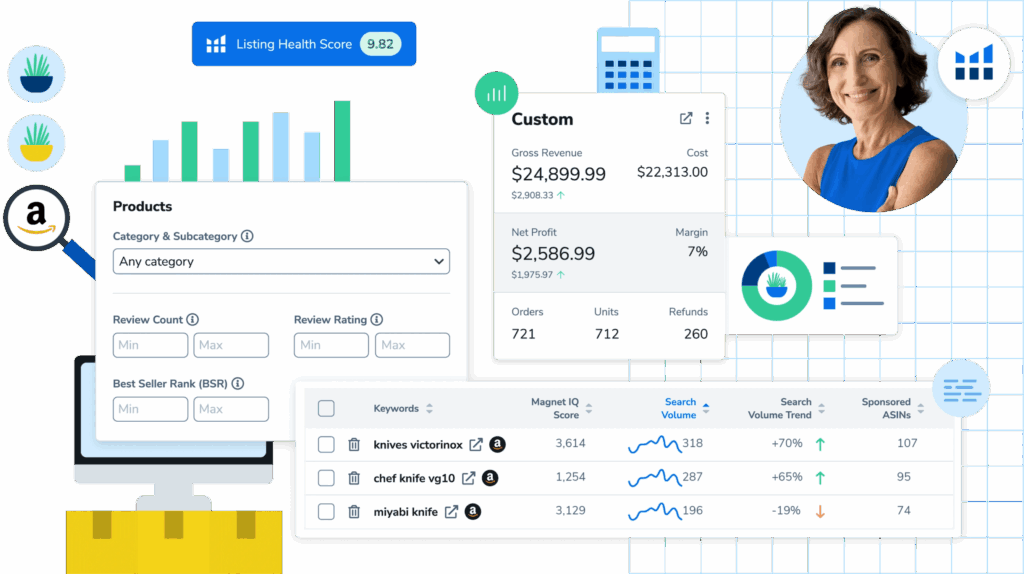
Helium 10 stands as the most comprehensive AI tool available for Amazon sellers, offering over 30 different features designed to optimize every aspect of your selling strategy. This platform combines advanced machine learning with Amazon’s vast data ecosystem to provide sellers with unprecedented insights into market trends, competitor analysis, and profit optimization opportunities.
The AI-driven product research capabilities help sellers identify profitable niches by analyzing millions of data points across Amazon’s marketplace. The tool’s intelligent algorithms can predict seasonal trends, identify emerging product categories, and suggest optimal pricing strategies based on competitor behavior and market demand patterns. Professional sellers particularly benefit from the advanced keyword research functionality, which uses natural language processing to discover high-converting search terms that competitors might overlook.
The inventory management features utilize predictive analytics to forecast demand, helping FBA sellers optimize their stock levels and avoid costly stockouts or overstock situations. These AI tools for Amazon sellers analyze historical sales data, seasonal patterns, and market trends to provide accurate demand forecasts that can significantly improve inventory turnover rates.
Helium 10’s listing optimization tools employ advanced AI to analyze top-performing product listings and suggest improvements for titles, bullet points, and descriptions. The platform’s A/B testing capabilities allow sellers to experiment with different listing variations while the AI tracks performance metrics and recommends the most effective combinations.
2. Jungle Scout: AI-Driven Market Intelligence Platform
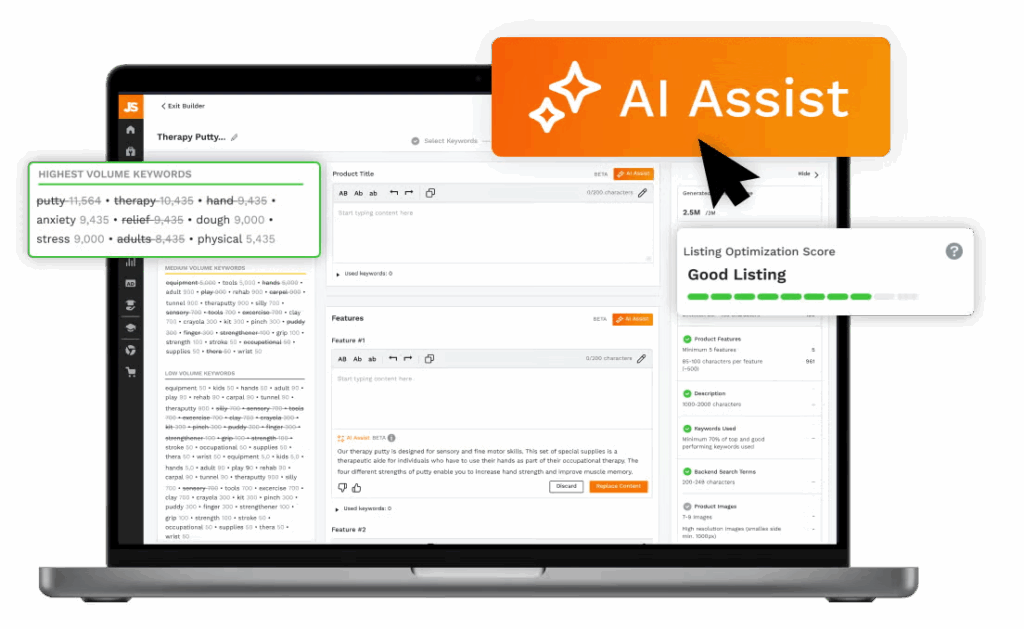
Jungle Scout has revolutionized how Amazon sellers approach market research through its sophisticated AI-powered analytics platform. The tool’s machine learning algorithms process vast amounts of marketplace data to identify trending products, assess competition levels, and predict market opportunities with remarkable accuracy.
The AI product database contains information on millions of Amazon products, updated in real-time to reflect current market conditions. Sellers can leverage this data to identify profitable product opportunities, analyze competitor strategies, and make data-driven decisions about product selection and pricing. The platform’s advanced filters allow users to narrow down products based on specific criteria such as sales volume, competition level, and profit margins.
The supplier database feature uses AI to match sellers with reliable manufacturers and suppliers, streamlining the sourcing process that traditionally requires extensive manual research. The intelligent algorithms evaluate supplier reliability, product quality, and pricing to recommend the best manufacturing partners for specific product categories.
Jungle Scout’s rank tracking capabilities employ machine learning to monitor keyword rankings and predict ranking changes based on various factors including competition level, search volume trends, and seasonal patterns. This information helps sellers adjust their SEO strategies proactively rather than reactively.
The platform’s sales analytics provide deep insights into market performance, helping sellers understand which products are gaining traction and which markets are becoming oversaturated. The AI-powered forecasting tools help sellers plan inventory purchases and marketing campaigns with greater precision.
3. AMZScout: Comprehensive AI Solution for Product Research
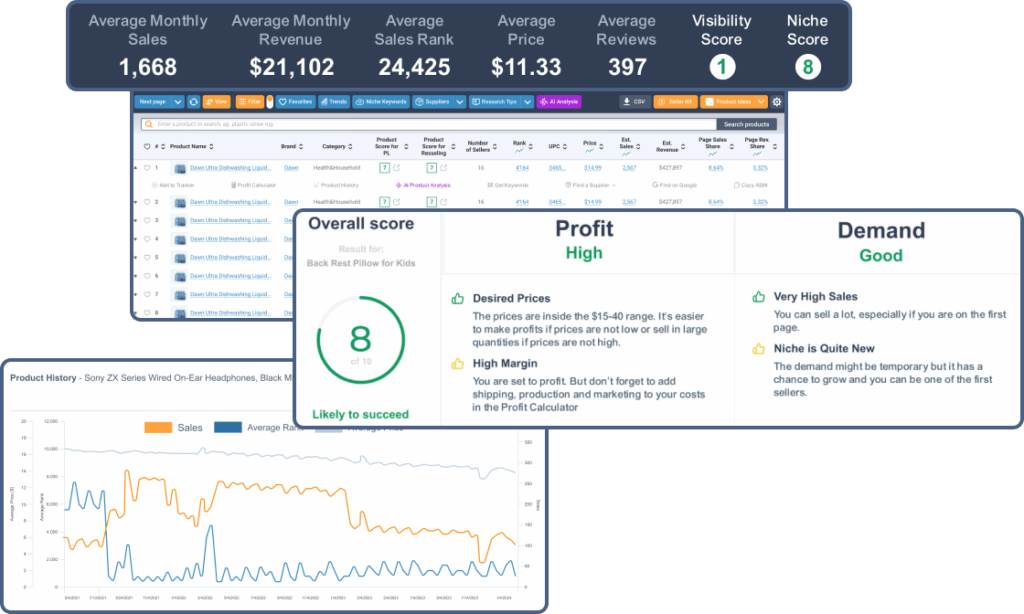
AMZScout leverages artificial intelligence to simplify the complex process of Amazon product research and selection. The platform’s AI algorithms analyze millions of products across Amazon’s marketplace to identify profitable opportunities that align with sellers’ investment capabilities and risk tolerance.
The product database uses machine learning to score products based on multiple factors including sales potential, competition level, and market trends. This scoring system helps sellers quickly identify products worth deeper investigation while filtering out opportunities that don’t meet their criteria. The AI continuously learns from market changes and adjusts scoring algorithms to maintain accuracy as marketplace conditions evolve.
The keyword research functionality employs natural language processing to identify high-value search terms and long-tail keywords that can drive targeted traffic to product listings. The AI analyzes search patterns, competition levels, and conversion rates to recommend keywords that offer the best return on investment for advertising campaigns.
AMZScout’s profit calculator incorporates AI-driven cost analysis to provide accurate profit projections that account for all Amazon fees, shipping costs, and potential advertising expenses. The tool’s intelligent algorithms can predict how changes in pricing or costs will impact overall profitability, helping sellers make informed decisions about product viability.
The chrome extension provides real-time market analysis directly within Amazon’s interface, allowing sellers to quickly evaluate products while browsing the marketplace. The AI processes product data instantly to provide key metrics including sales estimates, competition analysis, and profit potential.
4. Sellics (Now Perpetua): AI-Powered Advertising and Analytics
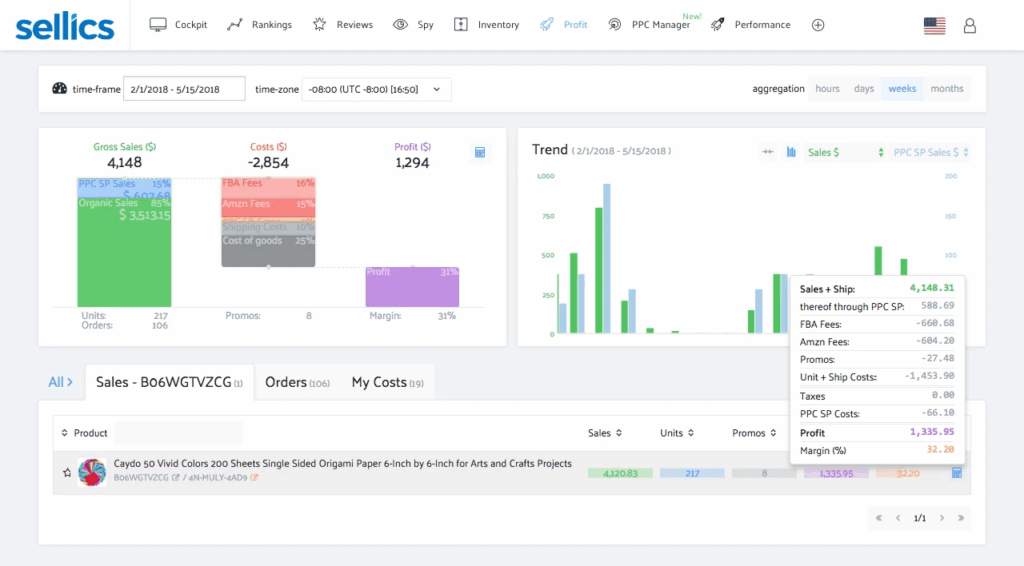
Perpetua, formerly known as Sellics, represents the cutting edge of AI-driven Amazon advertising management and analytics. The platform uses advanced machine learning algorithms to optimize advertising campaigns automatically, ensuring sellers achieve maximum return on ad spend while minimizing manual campaign management time.
The AI advertising optimization continuously monitors campaign performance across all Amazon advertising formats including Sponsored Products, Sponsored Brands, and Sponsored Display ads. The intelligent algorithms automatically adjust bids, pause underperforming keywords, and allocate budget to the highest-converting campaigns. This automation allows sellers to maintain competitive advertising presence without constant manual intervention.
The keyword discovery feature uses natural language processing to identify high-potential keywords that competitors might miss. The AI analyzes search patterns, competition levels, and conversion probabilities to recommend keywords that offer the best opportunities for profitable advertising campaigns.
Perpetua’s business intelligence dashboard provides comprehensive analytics that help sellers understand their overall Amazon performance. The AI-powered insights identify trends in sales performance, highlight opportunities for improvement, and suggest strategic adjustments based on marketplace dynamics.
The platform’s inventory management features use predictive analytics to forecast demand and optimize stock levels. The AI algorithms consider factors such as advertising performance, seasonal trends, and competitor activities to provide accurate demand predictions that help sellers maintain optimal inventory levels.
5. DataHawk: Advanced AI Analytics for Amazon Optimization
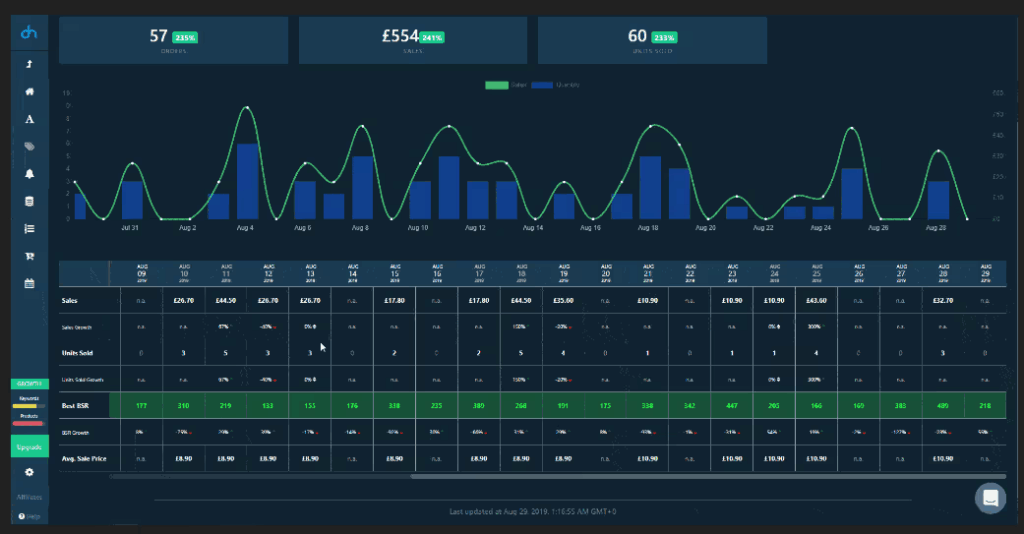
DataHawk employs sophisticated artificial intelligence to provide Amazon sellers with deep market insights and competitive intelligence. The platform’s machine learning algorithms process vast amounts of marketplace data to identify trends, opportunities, and potential threats that could impact seller performance.
The competitive analysis features use AI to monitor competitor activities including pricing changes, inventory levels, and new product launches. The intelligent algorithms can predict competitor strategies and suggest counter-strategies that help sellers maintain competitive advantage. This real-time competitive intelligence enables sellers to respond quickly to market changes and maintain their market position.
The keyword tracking capabilities employ advanced AI to monitor keyword rankings across multiple markets and predict ranking changes based on various factors including competition intensity, search volume trends, and algorithm updates. The platform provides detailed insights into keyword performance and suggests optimization strategies to improve organic rankings.
DataHawk’s market intelligence features use machine learning to identify emerging trends and product opportunities before they become mainstream. The AI algorithms analyze search patterns, consumer behavior, and market dynamics to predict which products and categories are likely to experience growth in the coming months.
The platform’s automated reporting features use AI to generate comprehensive performance reports that highlight key metrics, identify areas for improvement, and provide actionable recommendations for optimizing Amazon selling strategies.
6. Viral Launch: AI-Enhanced Product Launch and Optimization
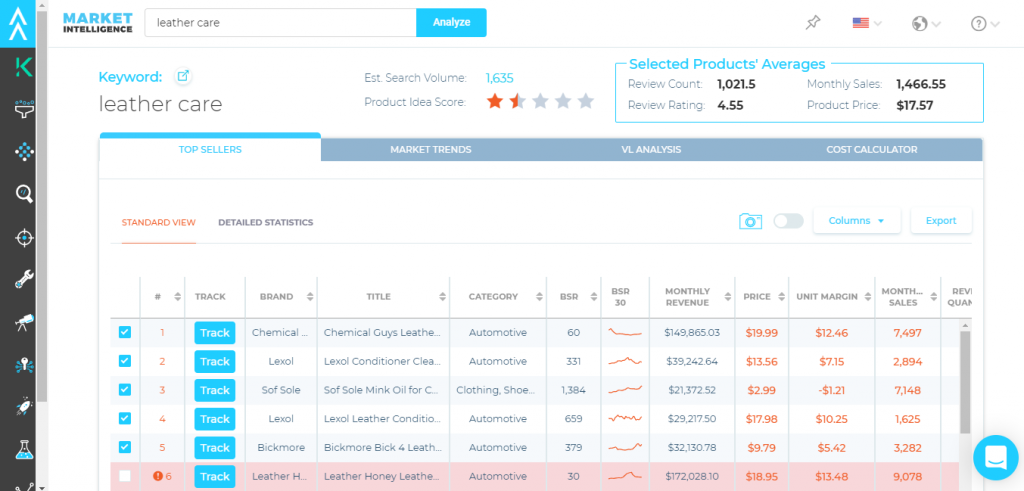
Viral Launch combines artificial intelligence with comprehensive Amazon selling tools to help sellers successfully launch and optimize their products. The platform’s AI algorithms analyze market conditions, competitor strategies, and consumer behavior to develop data-driven launch strategies that maximize product visibility and sales velocity.
The product discovery feature uses machine learning to identify profitable product opportunities by analyzing millions of data points across Amazon’s marketplace. The AI considers factors such as search volume, competition level, profit margins, and market trends to score products based on their potential for success.
The keyword research capabilities employ natural language processing to identify high-converting keywords and optimize product listings for maximum visibility. The AI analyzes search patterns, competition levels, and conversion rates to recommend keywords that offer the best opportunities for organic traffic and sales.
Viral Launch’s listing optimization tools use AI to analyze top-performing product listings and suggest improvements for titles, bullet points, descriptions, and backend keywords. The platform’s algorithms can predict which listing elements are most likely to improve conversion rates and search rankings.
The market intelligence features provide comprehensive insights into market trends, competitor activities, and consumer behavior patterns. The AI-powered analytics help sellers understand market dynamics and make informed decisions about product positioning, pricing, and marketing strategies.
7. ZonGuru: Comprehensive AI Platform for Amazon Success
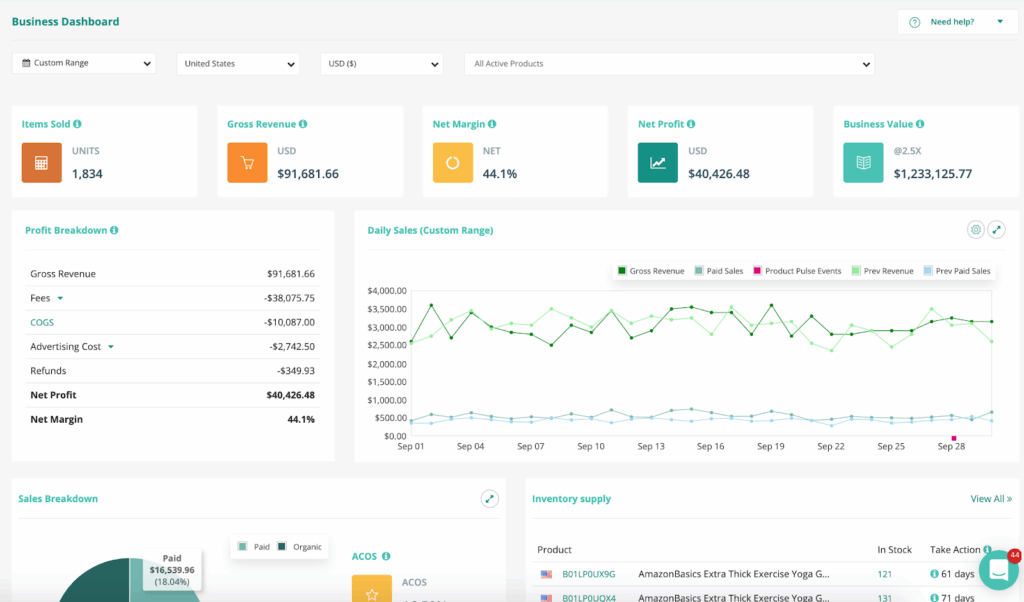
ZonGuru offers a complete suite of AI-powered tools designed to help Amazon sellers optimize every aspect of their business operations. The platform’s machine learning algorithms provide intelligent insights and automation capabilities that streamline complex selling tasks and improve overall efficiency.
The product research functionality uses AI to analyze market opportunities and identify profitable products that align with sellers’ investment criteria. The intelligent algorithms consider multiple factors including demand trends, competition levels, and profit potential to recommend products with the highest likelihood of success.
The keyword research tools employ advanced natural language processing to discover high-value search terms and long-tail keywords that can drive targeted traffic to product listings. The AI analyzes search patterns, competition dynamics, and conversion probabilities to recommend keywords that offer the best return on investment.
ZonGuru’s listing optimization features use machine learning to analyze successful product listings and suggest improvements for titles, descriptions, and keywords. The platform’s AI can predict which listing elements are most likely to improve search rankings and conversion rates.
The inventory management tools utilize predictive analytics to forecast demand and optimize stock levels. The AI algorithms analyze historical sales data, seasonal patterns, and market trends to provide accurate demand forecasts that help sellers maintain optimal inventory levels while minimizing storage costs.
8. Scope by Seller Labs: AI-Powered Keyword and Competitor Analysis
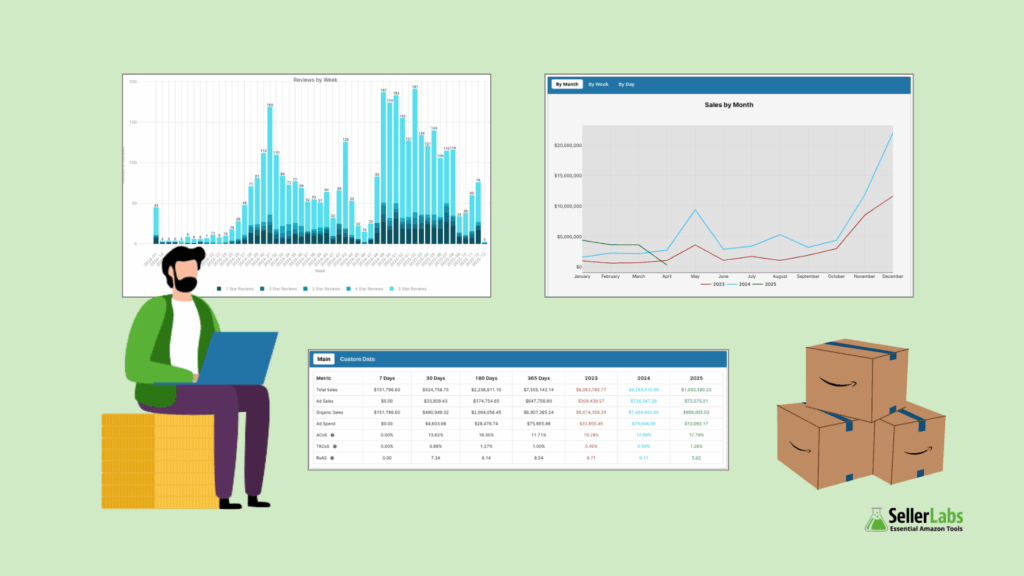
Scope leverages artificial intelligence to provide Amazon sellers with advanced keyword research and competitor analysis capabilities. The platform’s machine learning algorithms process vast amounts of marketplace data to identify high-opportunity keywords and competitive strategies that can drive sales growth.
The keyword research functionality uses AI to discover profitable search terms that competitors might overlook. The intelligent algorithms analyze search volume, competition levels, and conversion rates to recommend keywords that offer the best opportunities for organic traffic and advertising campaigns.
The competitor analysis features employ machine learning to monitor competitor activities including pricing strategies, keyword targeting, and product launches. The AI provides insights into competitor strategies and suggests counter-strategies that help sellers maintain competitive advantage.
Scope’s reverse ASIN lookup feature uses AI to analyze competitor product listings and identify the keywords they’re targeting. This competitive intelligence helps sellers understand successful keyword strategies and adapt them for their own products.
The platform’s PPC optimization tools use artificial intelligence to manage advertising campaigns automatically. The AI algorithms continuously monitor campaign performance and adjust bids, keywords, and budgets to maximize return on ad spend while minimizing manual management time.
9. SellerApp: AI-Driven Amazon Seller Intelligence Platform
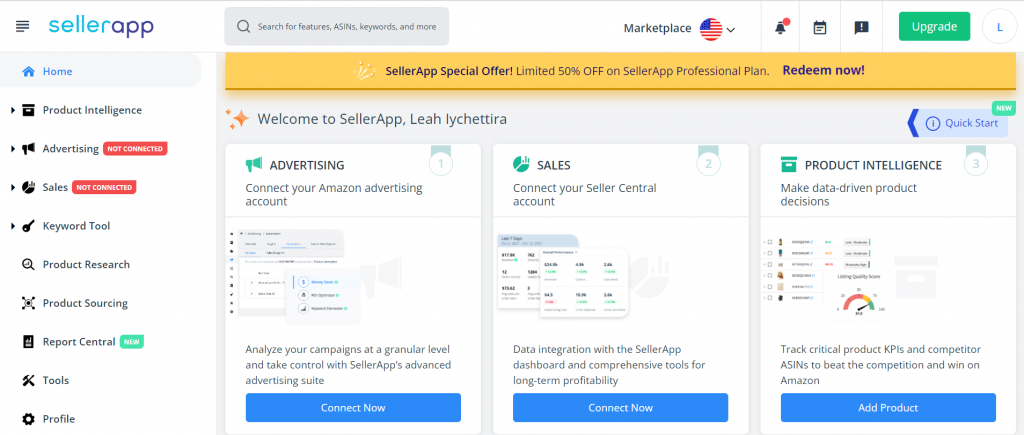
SellerApp combines artificial intelligence with comprehensive Amazon selling tools to provide sellers with intelligent insights and automation capabilities. The platform’s machine learning algorithms analyze marketplace data to identify opportunities for growth and optimization across all aspects of Amazon selling.
The product research features use AI to identify profitable product opportunities by analyzing market trends, competition levels, and consumer demand patterns. The intelligent algorithms score products based on multiple factors including sales potential, competition intensity, and profit margins.
The keyword research capabilities employ natural language processing to discover high-converting keywords and optimize product listings for maximum visibility. The AI analyzes search patterns, competition dynamics, and conversion rates to recommend keywords that drive the most qualified traffic.
SellerApp’s advertising optimization tools use machine learning to manage PPC campaigns automatically. The AI algorithms continuously monitor campaign performance and make real-time adjustments to bids, keywords, and budgets to maximize advertising effectiveness and return on investment.
The platform’s analytics dashboard provides comprehensive insights into business performance, market trends, and competitive dynamics. The AI-powered reporting features highlight key metrics and provide actionable recommendations for improving Amazon selling strategies.
10. Keepa: AI-Enhanced Price and Sales Rank Tracking
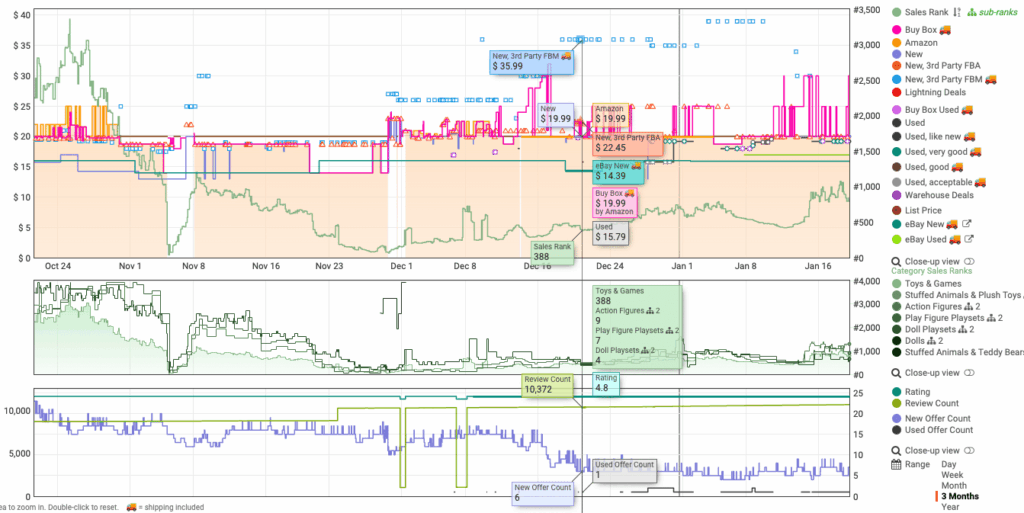
Keepa utilizes artificial intelligence to provide Amazon sellers with comprehensive price tracking and market analysis capabilities. The platform’s machine learning algorithms monitor millions of products across Amazon’s marketplace to provide real-time insights into pricing trends, sales rank changes, and market dynamics.
The price tracking features use AI to analyze pricing patterns and predict optimal pricing strategies for maximum profitability. The intelligent algorithms consider factors such as competitor pricing, demand trends, and market conditions to recommend pricing adjustments that can improve sales velocity and profit margins.
The sales rank tracking capabilities employ machine learning to monitor product performance and predict ranking changes based on various factors including competition level, sales velocity, and market trends. This information helps sellers understand product performance and make data-driven decisions about inventory management and marketing strategies.
Keepa’s deal alerts use AI to identify profitable sourcing opportunities by monitoring price drops and inventory changes across millions of products. The intelligent algorithms can predict which deals offer the best profit potential and alert sellers to time-sensitive opportunities.
The platform’s API integration capabilities allow sellers to incorporate Keepa’s AI-powered data into their own systems and workflows. This integration enables advanced automation and custom analytics that can further optimize selling strategies and operational efficiency.
AI Tool Selection Framework
Choosing the Right AI Tools for Your Business Stage
Selecting the most effective AI tools for Amazon sellers depends heavily on your current business stage, monthly revenue, and specific operational challenges.
| Business Stage | Primary Needs | Recommended AI Tools | Monthly Investment |
| Beginner (0-$10K/month) | Product research, basic optimization | AMZScout, Keepa, Helium 10 (starter) | $50-$150 |
| Growing ($10K-$50K/month) | Advertising optimization, inventory management | Jungle Scout, Perpetua, ZonGuru | $200-$500 |
| Established ($50K-$200K/month) | Advanced analytics, competitive intelligence | DataHawk, Viral Launch, SellerApp | $500-$1,500 |
| Enterprise ($200K+/month) | Custom solutions, API integrations | Multiple tools + custom development | $1,500-$5,000 |
The AI-Powered Seller’s Daily Workflow
Morning Routine (30 minutes)
- Review AI-generated overnight reports and alerts from your AI tools for Amazon sellers
- Check inventory forecasts and reorder recommendations
- Analyze competitor price changes and market shifts
- Review advertising performance and AI-suggested optimizations
Midday Analysis (45 minutes)
- Deep dive into AI-identified opportunities
- Optimize product listings based on AI recommendations
- Adjust pricing strategies using dynamic pricing tools
- Review and approve AI-generated content variations
Evening Strategy (30 minutes)
- Analyze daily performance against AI predictions
- Plan next day’s priorities based on AI insights
- Review long-term trend predictions and strategic implications
- Set up automated AI tasks for overnight processing
Unique AI Automation Strategies
The “AI Profit Maximization Loop”
This advanced strategy involves creating a continuous feedback loop where AI tools for Amazon sellers automatically:
- Identify underperforming products using machine learning analysis
- Generate optimization recommendations based on market data
- Implement approved changes across product listings and campaigns
- Monitor results and adjust strategies in real-time
- Scale successful optimizations across the entire product catalog
Multi-Market AI Intelligence
Smart sellers are using AI tools for Amazon sellers to simultaneously monitor and optimize across multiple Amazon marketplaces (US, UK, Germany, Japan, etc.). These sophisticated AI tools for Amazon sellers identify arbitrage opportunities, optimal expansion strategies, and market-specific optimization tactics that would be impossible to manage manually.
AI-Powered Customer Service Automation
Advanced sellers integrate AI chatbots and sentiment analysis tools to automatically handle customer inquiries, identify potential issues before they become problems, and proactively reach out to customers with personalized solutions.
AI Implementation Roadmap for Maximum Success
Phase 1: Foundation Building (Weeks 1-4)
Week 1-2: Tool Selection and Setup
- Conduct business needs assessment
- Select primary AI tools based on business stage
- Set up accounts and integrate with Amazon Seller Central
- Configure basic automation rules and alerts
Week 3-4: Data Integration and Training
- Import historical sales and inventory data
- Train AI algorithms on your specific product catalog
- Set up competitor monitoring and market analysis
- Create baseline performance metrics for comparison
Phase 2: Optimization and Scaling (Weeks 5-12)
Week 5-8: Active Optimization
- Implement AI-suggested listing improvements
- Launch automated PPC campaigns with AI management
- Begin dynamic pricing strategies
- Set up inventory forecasting and reorder automation
Week 9-12: Advanced Strategies
- Implement cross-platform intelligence gathering
- Begin predictive trend analysis and strategic planning
- Launch AI-powered customer service automation
- Develop custom AI workflows for unique business needs
Phase 3: Mastery and Innovation (Weeks 13-24)
Week 13-16: Performance Optimization
- Analyze AI tool effectiveness and ROI
- Optimize tool configurations based on performance data
- Integrate multiple AI tools for comprehensive automation
- Develop advanced competitive strategies
Week 17-24: Strategic Innovation
- Implement cutting-edge AI technologies
- Develop proprietary AI-powered business strategies
- Begin expansion into new markets using AI intelligence
- Create AI-driven product development processes
Measuring AI Tool Success: Key Performance Indicators
Primary Performance Metrics
| KPI Category | Traditional Performance | AI-Enhanced Performance | Measurement Method |
| Sales Velocity | 10-15% monthly growth | 25-40% monthly growth | Month-over-month comparison |
| Conversion Rate | 12-15% average | 18-25% average | Amazon analytics dashboard |
| Advertising ACOS | 25-35% average | 15-25% average | Campaign performance reports |
| Inventory Turnover | 8-10 times/year | 12-15 times/year | Financial analysis |
| Market Share Growth | 2-3% quarterly | 5-8% quarterly | Competitive analysis tools |
| Profit Margins | 15-20% average | 25-35% average | Financial reporting |
Secondary Success Indicators
Time Efficiency Metrics
- Research time reduced by 70-80%
- Listing optimization time reduced by 60-70%
- Campaign management time reduced by 80-90%
- Inventory planning time reduced by 75-85%
Quality Improvement Metrics
- Keyword targeting accuracy improved by 40-50%
- Pricing optimization effectiveness increased by 60-70%
- Product selection success rate improved by 35-45%
- Customer satisfaction scores increased by 15-25%
Advanced AI Integrations and Custom Solutions
API-Powered Custom Dashboards
Professional sellers are creating custom dashboards that integrate multiple AI tools through APIs, providing a unified view of all business metrics and AI-generated insights. These dashboards can automatically:
- Compile data from multiple AI tools
- Generate executive summaries and actionable insights
- Trigger automated actions based on predefined criteria
- Create custom reports for specific business needs
Machine Learning Model Development
Advanced sellers are developing their own machine learning models tailored to their specific business needs. These custom models can:
- Predict customer lifetime value with higher accuracy
- Identify optimal product bundling opportunities
- Forecast seasonal demand patterns specific to their products
- Optimize pricing strategies based on unique market positioning
AI-Powered Business Intelligence Systems
Enterprise-level sellers are implementing comprehensive AI-powered business intelligence systems that:
- Integrate data from multiple sources (Amazon, suppliers, market research)
- Provide predictive analytics for strategic planning
- Automate complex business processes
- Generate automated reports and recommendations
Future-Proofing Your AI Strategy
Emerging Technologies to Watch
Quantum Computing Applications As quantum computing becomes more accessible, it will revolutionize AI capabilities for Amazon sellers by:
- Processing vastly larger datasets for more accurate predictions
- Optimizing complex multi-variable problems in real-time
- Enabling unprecedented pattern recognition in market data
- Facilitating advanced simulation and modeling capabilities
Augmented Reality Integration AR technology combined with AI will create new opportunities for:
- Virtual product visualization and testing
- Enhanced customer engagement and experience
- Improved product photography and presentation
- Interactive marketing and advertising campaigns
Blockchain-Enhanced AI The integration of blockchain with AI will provide:
- Improved data security and verification
- Enhanced transparency in supply chain management
- Decentralized AI model training and sharing
- Secure and verifiable AI-generated insights
Preparing for Future AI Developments
Skill Development Priorities
- Data analysis and interpretation
- AI tool configuration and optimization
- Custom API integration and development
- Strategic planning based on AI insights
Technology Infrastructure
- Cloud-based data storage and processing
- Scalable AI tool integrations
- Automated workflow systems
- Real-time monitoring and alerting
Strategic Positioning
- Building AI-first business processes
- Developing proprietary AI capabilities
- Creating sustainable competitive advantages
- Preparing for market disruptions
Cost-Benefit Analysis of AI Tool Investment
| Investment Level | Monthly Cost | Expected ROI | Payback Period | Key Benefits |
| Basic AI Setup | $100-$300 | 150-200% | 2-3 months | Automated research, basic optimization |
| Intermediate Setup | $300-$800 | 200-300% | 1-2 months | Advanced analytics, PPC automation |
| Advanced Setup | $800-$2,000 | 300-500% | 3-4 weeks | Full automation, competitive intelligence |
| Enterprise Setup | $2,000+ | 400-600% | 2-3 weeks | Custom solutions, multi-market optimization |
Revolutionary AI Strategies Most Sellers Don’t Know About
The AI Product Bundling Strategy
One of the most overlooked applications of AI in Amazon selling is intelligent product bundling. Advanced AI algorithms can analyze customer purchasing patterns to identify products that are frequently bought together but aren’t currently bundled by competitors. This strategy involves using machine learning to scan millions of purchase histories and identify complementary products that have high co-purchase rates.
For example, AI might discover that customers who buy yoga mats also frequently purchase resistance bands within 30 days, but no seller is offering this combination. Smart sellers use this intelligence to create unique product bundles that capture more value per transaction while providing genuine convenience to customers.
Predictive Seasonal Inventory Management
While many sellers struggle with seasonal inventory fluctuations, AI-powered predictive modeling can forecast demand spikes months in advance. Advanced algorithms analyze historical weather patterns, economic indicators, social media trends, and past sales data to predict exactly when seasonal demand will peak for specific products.
This approach goes beyond simple year-over-year comparisons. AI can identify micro-seasons and trending patterns that human analysis might miss. For instance, AI might detect that certain home organization products spike in demand during the second week of January (New Year’s resolution effect) or that specific colors become popular based on fashion week trends.
Dynamic Competitive Pricing Psychology
AI-powered pricing strategies now incorporate psychological pricing principles with real-time competitive analysis. Advanced algorithms don’t just match competitor prices – they analyze consumer psychology data to determine optimal price points that maximize conversions while maintaining profit margins.
The AI considers factors like price anchoring, charm pricing effectiveness, and cultural pricing preferences across different market segments. It can automatically adjust prices throughout the day based on competitor movements, inventory levels, and psychological triggers that influence purchasing decisions.
AI-Powered Review Sentiment Analysis for Product Development
Smart sellers use AI to analyze millions of product reviews across their category to identify common pain points and unmet needs. Natural language processing algorithms can detect subtle patterns in customer feedback that indicate opportunities for product improvements or entirely new product concepts.
This strategy involves feeding AI systems thousands of reviews from competitor products to identify recurring complaints, desired features, and emerging trends. The AI can then suggest specific product modifications or new product ideas based on actual customer sentiment rather than guesswork.
Advanced AI Implementation Strategies
Cross-Platform Intelligence Integration
Professional sellers are beginning to implement AI systems that integrate data from multiple platforms beyond Amazon. These sophisticated setups combine Amazon sales data with social media sentiment, Google search trends, supply chain information, and economic indicators to create comprehensive market intelligence.
The AI algorithms process this multi-source data to identify opportunities and threats that single-platform analysis might miss. For example, the system might detect rising interest in a product category on social media before it shows up in Amazon search volume, giving sellers a competitive advantage in product selection and inventory planning.
AI-Driven Customer Lifetime Value Optimization
Advanced AI implementation focuses on maximizing customer lifetime value rather than just individual transaction profits. Machine learning algorithms analyze customer behavior patterns to identify high-value customers and develop strategies to increase their long-term engagement and repeat purchases.
This approach involves creating AI-powered customer segments based on purchasing behavior, review patterns, and engagement metrics. The AI then recommends specific strategies for each segment, such as targeted follow-up sequences, personalized product recommendations, and loyalty program optimization.
Automated Content Localization and Optimization
AI-powered content creation tools are becoming sophisticated enough to automatically optimize product listings for different geographic markets and cultural preferences. These systems can adapt product descriptions, titles, and marketing messages to resonate with local audiences while maintaining SEO effectiveness.
The AI considers regional language variations, cultural preferences, local competition, and market-specific search behaviors to create optimized content for each target market. This automation enables sellers to expand into new geographic markets without extensive manual content creation.
AI-Enhanced Supply Chain Optimization
Advanced AI applications in supply chain management go beyond simple inventory forecasting to optimize entire supply chain operations. Machine learning algorithms analyze supplier performance, shipping routes, customs processing times, and global logistics data to recommend optimal sourcing and fulfillment strategies.
The AI can predict potential supply chain disruptions, recommend alternative suppliers, and optimize shipping methods to minimize costs while maintaining service levels. This comprehensive approach to supply chain management provides significant competitive advantages in terms of cost control and customer satisfaction.
ROI Analysis: Measuring AI Tool Effectiveness
| Metric Category | Traditional Methods | AI-Enhanced Results | Improvement Factor |
| Keyword Research Time | 10-20 hours/week | 2-4 hours/week | 75% time reduction |
| Listing Optimization | 5-10% conversion improvement | 15-25% conversion improvement | 2-3x better results |
| PPC Campaign Performance | 10-15% ACOS improvement | 25-40% ACOS improvement | 2-3x better efficiency |
| Inventory Turnover | 6-8 turns/year | 10-12 turns/year | 50% improvement |
| Profit Margin Optimization | 15-20% margins | 25-35% margins | 60% improvement |
| Market Research Accuracy | 60-70% success rate | 85-90% success rate | 30% better predictions |
Emerging AI Technologies for Amazon Sellers
Voice Commerce Optimization
As voice commerce grows, AI tools are beginning to optimize product listings for voice search queries. These systems analyze natural language patterns and conversational search behaviors to optimize product content for voice assistants like Alexa.
The AI identifies how customers phrase voice queries differently from text searches and adjusts product titles, descriptions, and backend keywords accordingly. This emerging strategy positions sellers to capture the growing voice commerce market segment.
Visual AI for Product Photography
Advanced AI applications now include automated product photography optimization. Computer vision algorithms can analyze top-performing product images and suggest improvements for lighting, angles, backgrounds, and composition.
Some AI tools can even generate multiple image variations automatically, allowing sellers to A/B test different visual presentations without expensive photo shoots. This technology democratizes high-quality product photography for smaller sellers.
Predictive Trend Analysis
Next-generation AI tools are incorporating social media monitoring, patent filing analysis, and global economic indicators to predict product trends months or even years in advance. These systems can identify emerging categories before they become mainstream, giving early movers significant advantages.
The AI analyzes patterns in innovation cycles, consumer behavior shifts, and market adoption rates to predict which products will become popular and when. This long-term trend prediction enables strategic business planning and product development.
Maximizing AI Tool Effectiveness for Amazon Success
Successfully implementing AI tools for Amazon sellers requires a strategic approach that aligns technology capabilities with specific business objectives. Professional sellers understand that AI tools for Amazon sellers are most effective when used as part of a comprehensive selling strategy rather than isolated solutions. The key to maximizing effectiveness lies in understanding how different AI tools for Amazon sellers complement each other and contribute to overall business growth.
Data quality plays a crucial role in AI tool effectiveness. Sellers should ensure their product information, inventory data, and performance metrics are accurate and up-to-date to enable AI algorithms to provide the most relevant insights and recommendations. Regular data audits and cleaning processes help maintain the accuracy of AI-powered analytics and predictions.
Integration capabilities between different AI tools for Amazon sellers can significantly enhance their effectiveness. Many successful sellers use multiple AI tools for Amazon sellers that work together to provide comprehensive marketplace intelligence. For example, combining keyword research tools with advertising optimization platforms can create powerful synergies that improve both organic rankings and paid advertising performance.
Continuous learning and adaptation are essential for maximizing AI tool benefits. The Amazon marketplace constantly evolves, and AI tools must be regularly updated and reconfigured to remain effective. Sellers should stay informed about platform updates, algorithm changes, and new feature releases to ensure they’re leveraging the full potential of their AI tools.
Advanced Strategies for AI-Powered Amazon Selling
Advanced AI implementation goes beyond basic tool usage to create sophisticated selling strategies that leverage machine learning capabilities for competitive advantage. Professional sellers develop comprehensive AI workflows that automate routine tasks while providing intelligent insights for strategic decision-making.
Market segmentation strategies benefit significantly from AI-powered analytics that can identify distinct customer segments and their unique preferences. AI tools can analyze purchasing patterns, search behavior, and demographic data to help sellers tailor their products and marketing messages to specific customer groups.
Dynamic pricing strategies powered by AI algorithms can significantly improve profitability by automatically adjusting prices based on market conditions, competitor activities, and demand patterns. Advanced AI pricing tools consider multiple variables simultaneously to optimize prices for maximum revenue while maintaining competitive positioning.
Inventory optimization through AI-powered demand forecasting helps sellers maintain optimal stock levels while minimizing carrying costs and stockout risks. Machine learning algorithms can analyze historical sales data, seasonal patterns, and market trends to predict demand with remarkable accuracy.
Future of AI in Amazon Selling
The future of AI in Amazon selling promises even more sophisticated capabilities that will further transform how sellers operate and compete. Emerging technologies such as computer vision, natural language generation, and advanced predictive analytics will create new opportunities for automation and optimization.
Generative AI applications are beginning to revolutionize content creation for Amazon sellers. AI-powered tools can generate product descriptions, titles, and marketing copy that’s optimized for both search engines and human readers. These capabilities will become increasingly sophisticated, enabling sellers to create compelling content at scale.
Predictive analytics will become more accurate and comprehensive, enabling sellers to anticipate market changes and adjust strategies proactively. Advanced AI algorithms will be able to predict trends, identify emerging opportunities, and recommend strategic pivots before they become obvious to competitors.
Integration with Amazon’s own AI initiatives will create new opportunities for sellers to leverage the platform’s machine learning capabilities. Amazon’s continued investment in AI infrastructure and tools will provide sellers with access to increasingly powerful capabilities for optimizing their selling strategies.
The convergence of AI with other emerging technologies such as voice commerce, augmented reality, and IoT will create new selling channels and customer interaction opportunities. Sellers who effectively leverage these technologies will gain significant competitive advantages in the evolving e-commerce landscape.
Conclusion
The integration of AI tools for Amazon sellers into selling strategies has become essential for success in today’s competitive marketplace. The ten AI tools for Amazon sellers discussed in this guide represent the best available solutions for different aspects of Amazon selling, from product research and keyword optimization to advertising management and inventory planning.
Successful implementation of AI tools for Amazon sellers requires a strategic approach that considers how different tools complement each other and contribute to overall business objectives. Sellers who invest in learning how to effectively use these AI tools for Amazon sellers and integrate them into comprehensive selling strategies will be best positioned to capitalize on the opportunities presented by AI technology.
The future of Amazon selling will be increasingly driven by artificial intelligence, making it crucial for sellers to embrace these technologies now. Those who develop AI-powered selling strategies today will have significant advantages as the marketplace continues to evolve and become more competitive.
By leveraging the power of artificial intelligence through these sophisticated tools, Amazon sellers can automate routine tasks, gain deeper market insights, and make more informed decisions that drive sustainable business growth. The investment in AI tools and the learning required to use them effectively will pay dividends as the Amazon marketplace becomes increasingly complex and competitive.