8 Best AI Tools for DevOps 2025: Revolutionizing Development and Operations Workflows
This comprehensive guide explores the most powerful AI tools for DevOps 2025 that are reshaping how organizations approach continuous integration, deployment, and monitoring. The landscape of software development and operations has undergone a tremendous transformation with the integration of artificial intelligence. Modern development teams are increasingly leveraging intelligent automation to streamline their workflows, reduce manual intervention, and accelerate software delivery. This comprehensive guide explores the most powerful solutions that are reshaping how organizations approach continuous integration, deployment, and monitoring in 2025.
Understanding the Role of Artificial Intelligence in Modern Development Operations
As more businesses turn to AI tools for DevOps 2025, the ability to proactively detect and resolve performance bottlenecks is transforming development cycles. The integration of intelligent systems into development workflows has fundamentally changed how teams approach software delivery. AI in DevOps enhances automation by intelligently analyzing patterns, improves system reliability through predictive capabilities, and enables organizations to achieve unprecedented levels of efficiency in their development pipelines.
Machine learning algorithms are now capable of analyzing vast amounts of operational data to predict potential issues before they impact production environments. This predictive approach allows teams to implement proactive measures rather than reactive solutions, significantly reducing downtime and improving overall system reliability.
The convergence of artificial intelligence with traditional development practices has created new opportunities for organizations to optimize their software delivery processes. Teams can now automate complex decision-making processes, implement intelligent testing strategies, and maintain continuous monitoring with minimal human intervention.
Key Benefits of Implementing Intelligent Solutions in Development Workflows
Organizations that adopt intelligent automation solutions in their development workflows experience significant improvements in productivity, quality, and time-to-market. These benefits extend across the entire software development lifecycle, from initial code creation to production deployment and ongoing maintenance.
Enhanced Automation Capabilities Modern intelligent systems can automate repetitive tasks that traditionally required significant human effort. This includes automated code review, intelligent testing, and dynamic resource allocation based on usage patterns.
Improved Predictive Analytics Advanced machine learning algorithms can analyze historical data to predict potential bottlenecks, security vulnerabilities, and performance issues before they impact production environments.
Streamlined Collaboration Intelligent platforms facilitate better communication between development and operations teams by providing unified dashboards, automated notifications, and intelligent insights that help teams make informed decisions.
Reduced Manual Intervention By automating routine tasks and providing intelligent recommendations, these solutions significantly reduce the need for manual intervention in development workflows, allowing teams to focus on higher-value activities.
Below, we explore eight of the most impactful AI tools for DevOps 2025, each offering unique capabilities across development and operations pipelines.
Top 8 AI-Powered DevOps Tools for 2025
1. GitHub Copilot for DevOps Workflows
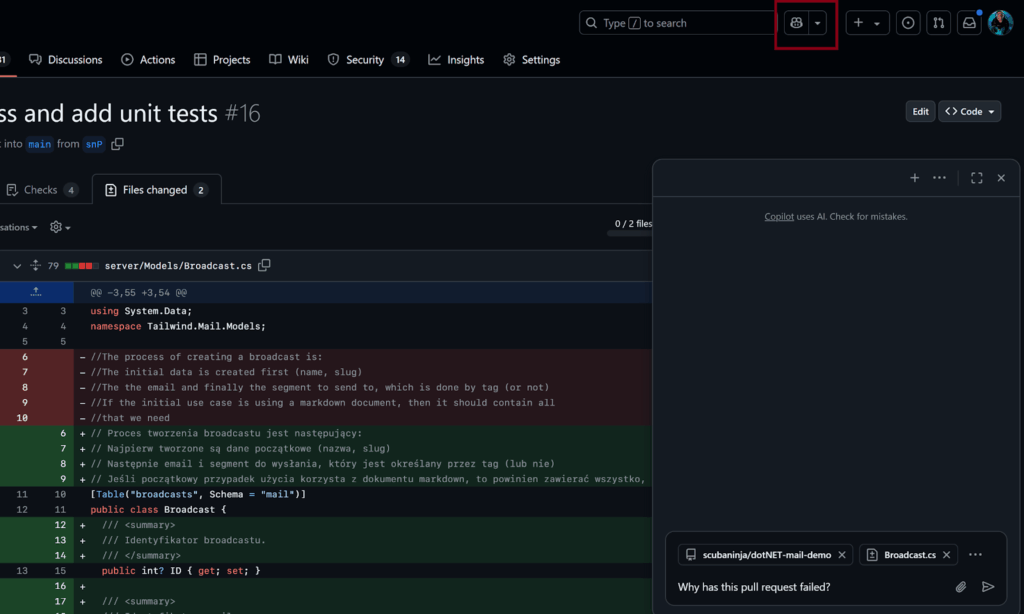
GitHub Copilot has evolved beyond simple code completion to become a comprehensive development assistant that integrates seamlessly with modern development workflows. This intelligent solution provides context-aware suggestions, automated documentation generation, and intelligent code refactoring capabilities.
Key Features:
- Intelligent code completion and generation
- Automated documentation creation
- Context-aware suggestions for infrastructure as code
- Integration with popular development environments
- Support for multiple programming languages and frameworks
Benefits for Development Teams:
- Accelerated development cycles through intelligent assistance
- Reduced time spent on routine coding tasks
- Improved code quality through intelligent suggestions
- Enhanced developer productivity and satisfaction
2. GitLab with Integrated AI Capabilities
GitLab’s comprehensive platform combines version control, continuous integration, and deployment capabilities with advanced machine learning features. The platform’s intelligent automation capabilities enable teams to implement sophisticated development workflows with minimal configuration.
Key Features:
- Intelligent merge request analysis
- Automated security scanning and vulnerability detection
- Predictive pipeline optimization
- Smart deployment strategies
- Integrated monitoring and observability
Benefits for Organizations:
- Unified platform for entire development lifecycle
- Automated security and compliance checks
- Intelligent resource optimization
- Enhanced collaboration between teams
3. Azure DevOps with AI-Enhanced Pipelines
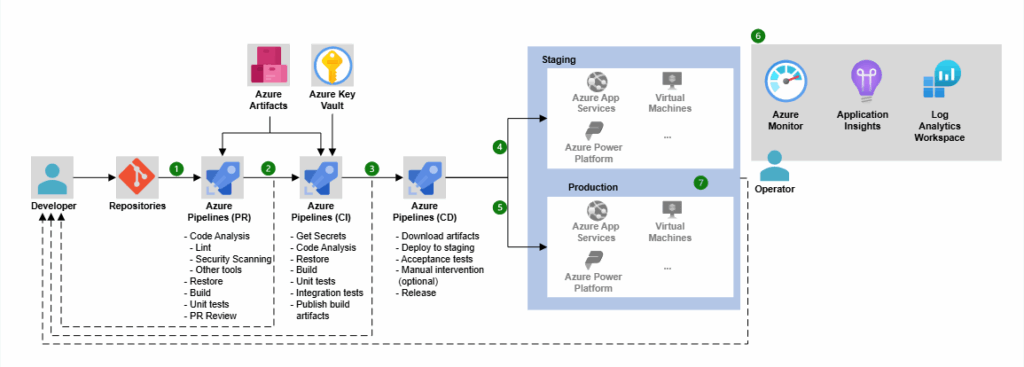
Microsoft’s Azure DevOps platform leverages advanced machine learning algorithms to optimize continuous integration and deployment pipelines. These tools enable proactive monitoring and troubleshooting, ensuring issues can be resolved before they affect production.
Key Features:
- Intelligent build optimization
- Predictive failure detection
- Automated resource scaling
- Advanced analytics and reporting
- Integration with Azure cloud services
Benefits for Enterprise Teams:
- Seamless integration with Microsoft ecosystem
- Scalable infrastructure management
- Advanced security and compliance features
- Comprehensive monitoring and diagnostics
4. Jenkins with AI-Powered Plugins
Jenkins continues to be a cornerstone of continuous integration with enhanced capabilities through intelligent plugins and extensions. Jenkins, a free and open-source automation server, remains a cornerstone of CI/CD, renowned for its flexibility and extensive plugin ecosystem.
Key Features:
- Intelligent build scheduling and optimization
- Automated testing and quality assurance
- Predictive maintenance and monitoring
- Extensive plugin ecosystem
- Cross-platform compatibility
Benefits for Development Teams:
- Flexible and customizable automation workflows
- Strong community support and documentation
- Cost-effective solution for organizations
- Extensive integration capabilities
5. Datadog for Intelligent Monitoring
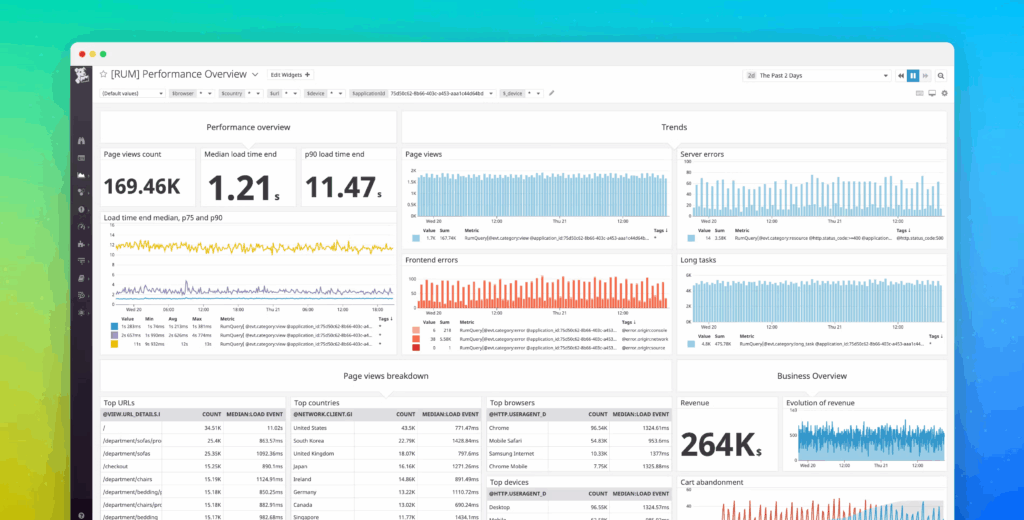
Datadog’s comprehensive monitoring platform utilizes advanced machine learning algorithms to provide intelligent insights into application performance, infrastructure health, and user experience metrics.
Key Features:
- Intelligent anomaly detection
- Predictive alerting and notifications
- Advanced log analysis and correlation
- Real-time performance monitoring
- Comprehensive dashboard and visualization
Benefits for Operations Teams:
- Proactive issue identification and resolution
- Reduced mean time to recovery
- Enhanced visibility into system performance
- Improved user experience monitoring
6. PagerDuty for Intelligent Incident Management
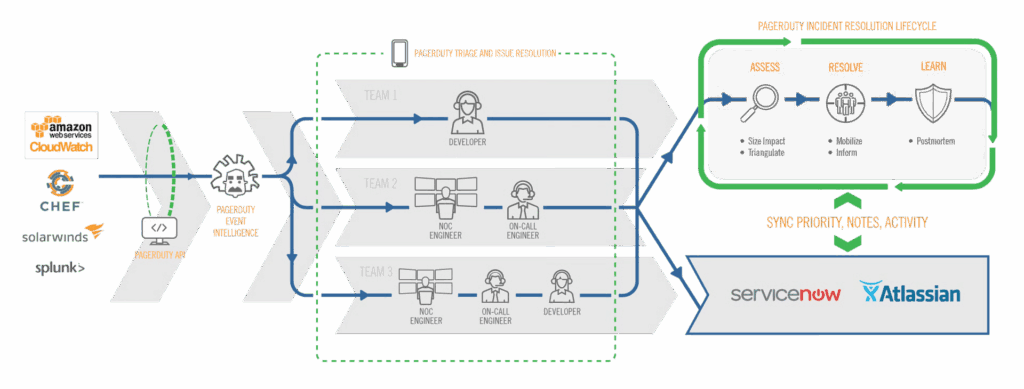
PagerDuty’s intelligent incident management platform leverages machine learning to automate incident response, predict potential issues, and optimize resolution processes.
Key Features:
- Intelligent incident routing and escalation
- Predictive alerting and noise reduction
- Automated response orchestration
- Advanced analytics and reporting
- Integration with popular development tools
Benefits for Operations Teams:
- Reduced alert fatigue and false positives
- Faster incident resolution times
- Improved team collaboration during incidents
- Enhanced visibility into system reliability
7. Splunk for Intelligent Observability
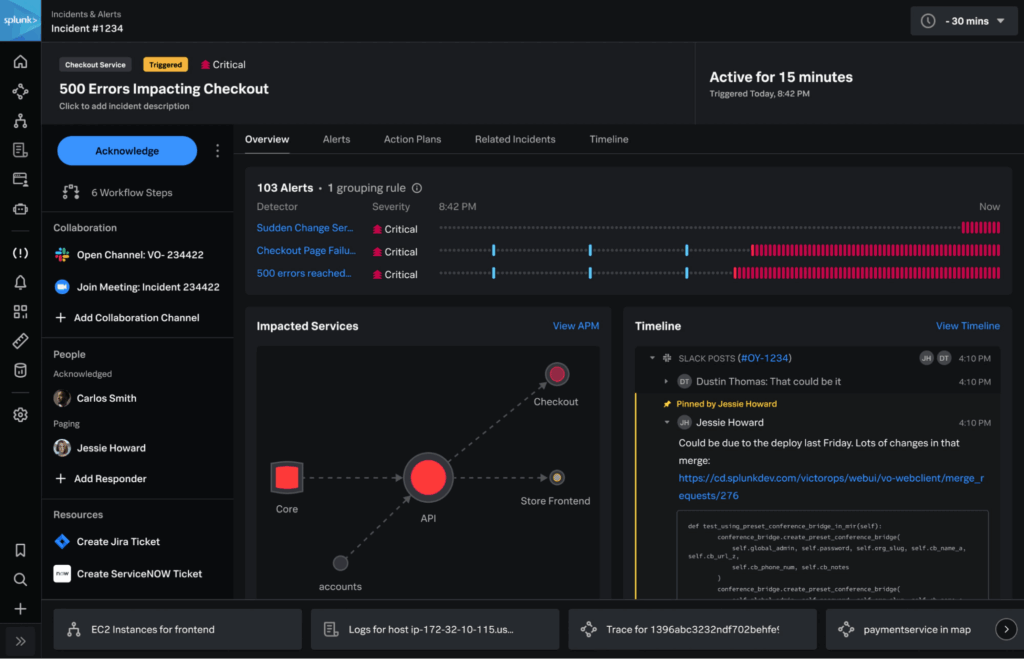
Splunk’s observability platform combines advanced machine learning with comprehensive data analysis capabilities to provide intelligent insights into application performance and system behavior.
Key Features:
- Intelligent log analysis and correlation
- Predictive analytics and forecasting
- Real-time monitoring and alerting
- Advanced visualization and dashboards
- Integration with development and operations tools
Benefits for Organizations:
- Comprehensive visibility into system performance
- Proactive issue identification and resolution
- Enhanced security monitoring and compliance
- Improved decision-making through data-driven insights
8. Harness for Intelligent Deployment
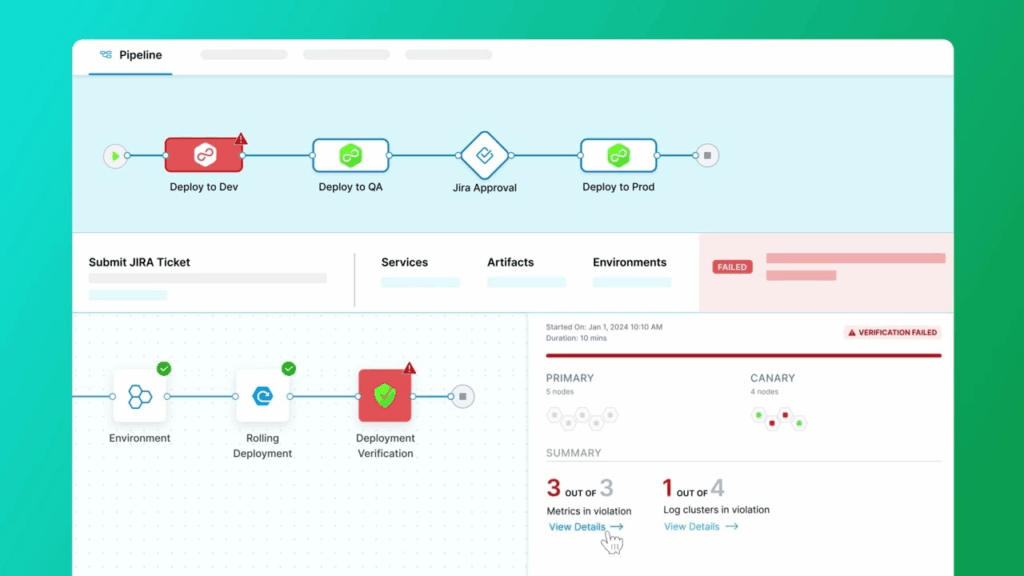
Harness provides an intelligent deployment platform that automates complex deployment processes, implements intelligent rollback strategies, and provides comprehensive monitoring and observability.
Key Features:
- Intelligent deployment automation
- Automated rollback and recovery
- Comprehensive monitoring and verification
- Advanced analytics and reporting
- Integration with popular cloud platforms
Benefits for Development Teams:
- Reduced deployment risks and failures
- Faster time-to-market for new features
- Enhanced visibility into deployment processes
- Improved collaboration between teams
Comparative Analysis of AI DevOps Tools
| Tool | Primary Focus | Key Strength | Best For | Pricing Model |
| GitHub Copilot | Code Generation | Intelligent assistance | Development teams | Subscription-based |
| GitLab AI | Complete DevOps | Unified platform | Enterprise organizations | Tiered pricing |
| Azure DevOps | Microsoft ecosystem | Cloud integration | Microsoft-centric teams | Pay-as-you-go |
| Jenkins AI | Build automation | Flexibility | Cost-conscious teams | Open source |
| Datadog | Monitoring | Observability | Operations teams | Usage-based |
| PagerDuty | Incident management | Response automation | On-call teams | Per-user pricing |
| Splunk | Data analysis | Intelligence insights | Large enterprises | Enterprise licensing |
| Harness | Deployment | Automation | Deployment-focused teams | Feature-based |
Implementation Strategies for AI DevOps Tools
Choosing the right AI tools for DevOps 2025 begins with understanding your team’s needs and pain points across your software delivery lifecycle. Successfully implementing intelligent automation solutions requires careful planning, strategic thinking, and gradual adoption. Organizations should begin by identifying specific pain points in their current workflows and selecting solutions that address these challenges most effectively.
Assessment and Planning Phase Before implementing any intelligent solution, organizations should conduct a comprehensive assessment of their current development and operations workflows. This includes identifying bottlenecks, measuring current performance metrics, and defining success criteria for the implementation.
Pilot Implementation Start with a small-scale pilot implementation to evaluate the effectiveness of selected solutions. This approach allows teams to learn from experience, identify potential challenges, and refine their implementation strategy before full-scale deployment.
Training and Adoption Successful implementation requires comprehensive training programs to ensure team members can effectively utilize new intelligent capabilities. This includes both technical training on specific tools and broader education on best practices for working with intelligent automation.
Continuous Optimization Once implemented, organizations should continuously monitor and optimize their intelligent automation solutions. This includes regular performance reviews, feedback collection, and iterative improvements to maximize the value of their investment.
Future Trends in AI-Powered DevOps
As the ecosystem of AI tools for DevOps 2025 continues to mature, we can expect more advanced orchestration, security integration, and observability features. The evolution of artificial intelligence in development operations continues to accelerate, with emerging trends that will shape the future of software delivery. CI/CD tools in 2025 are advancing to enhance automation, security, and scalability while reducing manual intervention.
Increased Automation and Orchestration Future solutions will provide even greater levels of automation, with intelligent systems capable of managing complex multi-cloud deployments, automated security remediation, and self-healing infrastructure.
Enhanced Security Integration Security will become increasingly integrated into development workflows, with intelligent solutions providing real-time threat detection, automated vulnerability remediation, and comprehensive compliance monitoring.
Improved Collaboration and Communication Next-generation platforms will facilitate better collaboration between development and operations teams through intelligent workflow orchestration, automated communication, and unified visibility across all aspects of the software delivery lifecycle.
Advanced Analytics and Insights Future solutions will provide more sophisticated analytics and insights, enabling organizations to make data-driven decisions about their development processes, resource allocation, and strategic planning.
Best Practices for Maximizing AI DevOps Tool Effectiveness
Organizations can maximize the effectiveness of their intelligent automation investments by following proven best practices and maintaining a strategic approach to implementation and optimization.
Define Clear Objectives and Success Metrics Before implementing any solution, organizations should define clear objectives and establish measurable success metrics. This includes identifying specific pain points, setting performance targets, and creating mechanisms for ongoing measurement and evaluation.
Invest in Team Training and Development Successful adoption requires comprehensive training programs that help team members understand both the technical capabilities of new solutions and the strategic benefits of intelligent automation.
Implement Gradual Rollout Strategies Rather than attempting to implement all capabilities simultaneously, organizations should adopt a gradual rollout strategy that allows teams to learn and adapt progressively.
Maintain Focus on Continuous Improvement Intelligent automation is not a one-time implementation but an ongoing process of optimization and improvement. Organizations should regularly review their processes, gather feedback, and implement enhancements.
Security Considerations for AI DevOps Implementation
As organizations adopt intelligent automation solutions, security becomes an increasingly important consideration. Modern platforms must provide comprehensive security features while maintaining the flexibility and efficiency that teams require.
Data Protection and Privacy Organizations must ensure that their intelligent automation solutions provide adequate protection for sensitive data and comply with relevant privacy regulations. This includes encryption, access controls, and audit trails.
Access Control and Authentication Implementing robust access control mechanisms ensures that only authorized personnel can access sensitive systems and data. This includes multi-factor authentication, role-based access control, and comprehensive audit logging.
Compliance and Governance Organizations must ensure that their intelligent automation solutions support compliance with industry regulations and internal governance requirements. This includes automated compliance checking, policy enforcement, and comprehensive reporting capabilities.
Measuring Success and ROI of AI DevOps Tools
Organizations need to establish clear metrics and measurement frameworks to evaluate the success of their intelligent automation investments and demonstrate return on investment.
Performance Metrics Key performance indicators should include deployment frequency, lead time for changes, change failure rate, and mean time to recovery. These metrics provide insight into the effectiveness of intelligent automation solutions.
Quality Metrics Quality metrics should focus on defect rates, security vulnerabilities, and compliance adherence. Intelligent automation solutions should demonstrate measurable improvements in these areas.
Efficiency Metrics Efficiency metrics should include resource utilization, cost reduction, and time savings. These metrics help organizations understand the direct impact of their intelligent automation investments.
Team Satisfaction and Productivity Organizations should also measure team satisfaction and productivity to ensure that intelligent automation solutions are enhancing rather than hindering the developer experience.
Common Challenges and Solutions
While intelligent automation offers significant benefits, organizations may encounter challenges during implementation. Understanding these challenges and having strategies to address them is essential for successful adoption.
Integration Complexity Integrating intelligent automation solutions with existing tools and workflows can be complex. Organizations should plan for integration challenges and allocate adequate resources for implementation.
Change Management Adopting intelligent automation requires significant changes to existing processes and workflows. Organizations should implement comprehensive change management programs to ensure successful adoption.
Skills Gap Teams may lack the skills necessary to effectively utilize intelligent automation solutions. Organizations should invest in training and development programs to address skills gaps.
Cost Considerations While intelligent automation can provide significant ROI, initial implementation costs can be substantial. Organizations should carefully evaluate costs and benefits before making investment decisions.
Frequently Asked Questions
Q: What are the primary benefits of implementing intelligent automation in development workflows? A: The primary benefits include enhanced automation capabilities, improved predictive analytics, streamlined collaboration between teams, and reduced manual intervention in routine tasks. Organizations typically experience faster deployment cycles, improved code quality, and better system reliability.
Q: How do I choose the right intelligent automation solution for my organization? A: Consider factors such as your current technology stack, team size, specific pain points, budget constraints, and integration requirements. Start with a pilot implementation to evaluate effectiveness before full-scale deployment.
Q: What are the security implications of adopting intelligent automation solutions? A: Security considerations include data protection, access control, compliance requirements, and audit trails. Choose solutions that provide comprehensive security features and ensure they align with your organization’s security policies.
Q: How can I measure the ROI of intelligent automation investments? A: Focus on metrics such as deployment frequency, lead time reduction, defect rates, resource utilization, and team productivity. Establish baseline measurements before implementation and track improvements over time.
Q: What are the most common challenges in implementing intelligent automation? A: Common challenges include integration complexity, change management, skills gaps, and cost considerations. Address these challenges through careful planning, comprehensive training, and gradual implementation strategies.
Q: How will intelligent automation evolve in the future? A: Future trends include increased automation and orchestration, enhanced security integration, improved collaboration capabilities, and advanced analytics. Organizations should stay informed about emerging trends to maximize their investments.
Q: Can small organizations benefit from intelligent automation solutions? A: Yes, many solutions offer scalable pricing models and features that can benefit organizations of all sizes. Start with core capabilities and expand as your needs grow.
Q: What skills do teams need to effectively utilize intelligent automation solutions? A: Teams need both technical skills specific to chosen solutions and broader understanding of intelligent automation principles. Invest in comprehensive training programs and continuous learning opportunities.
Conclusion
The integration of artificial intelligence into development and operations workflows represents a fundamental shift in how organizations approach software delivery. The eight solutions highlighted in this guide offer powerful capabilities that can transform development workflows, improve system reliability, and accelerate time-to-market for new features and products.
Success in implementing intelligent automation requires careful planning, strategic thinking, and commitment to continuous improvement. Organizations that invest in these capabilities while maintaining focus on team training, security considerations, and gradual adoption strategies will be well-positioned to realize the full benefits of intelligent automation.
As the technology continues to evolve, organizations should remain informed about emerging trends and continuously evaluate new solutions that can enhance their development and operations capabilities. The future of software delivery lies in intelligent automation, and organizations that embrace these technologies today will maintain competitive advantages in an increasingly digital world.
The journey toward intelligent automation is not merely about adopting new tools but about transforming organizational culture, processes, and practices to embrace the possibilities that artificial intelligence brings to software development and operations. With the right approach, tools, and commitment, organizations can achieve unprecedented levels of efficiency, quality, and reliability in their software delivery processes.