
Leonardo AI Review 2025: The Ultimate Guide to This Game-Changing AI Art Generator
In this Leonardo AI Review 2025, we explore how this game-changing AI art generator is transforming creative workflows for artists, marketers, and designers. As artificial intelligence tools continue to evolve rapidly, Leonardo AI stands out by offering a powerful blend of image generation, video creation, and customization—making it a favorite among both professionals and beginners.
What Makes Leonardo AI Stand Out in 2025
Leonardo AI has emerged as a formidable player in the AI-generated art space, offering a unique blend of accessibility, customization, and cutting-edge technology. Unlike many competitors that focus solely on image generation, Leonardo provides a comprehensive suite of creative tools that cater to diverse artistic needs.
The platform’s standout feature is its exceptional user-friendly interface combined with professional-grade capabilities. While other AI art generators often require extensive technical knowledge or complex prompt engineering, Leonardo AI bridges the gap between simplicity and sophistication. Users can create stunning visuals with minimal effort while having the option to dive deep into advanced customization when needed.
One of the most significant advantages of Leonardo is its generous approach to accessibility. The platform offers substantial value through its token-based system, allowing users to generate up to 150 images daily on the free plan. This generous allocation makes it an attractive option for both beginners exploring AI art and professionals requiring consistent output for their projects.
Core Features and Capabilities
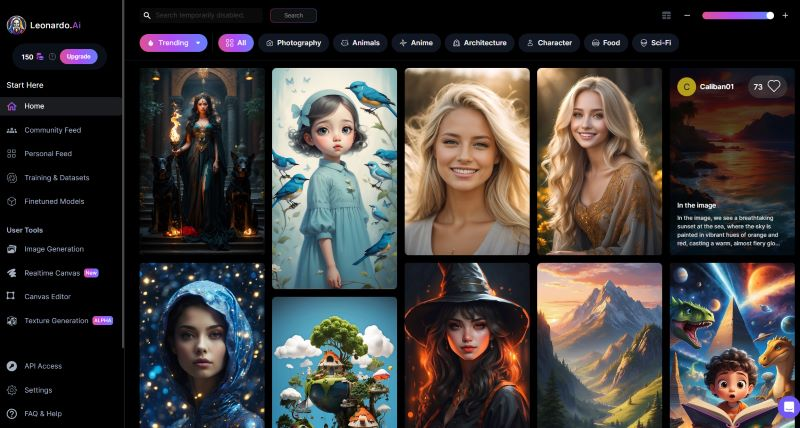
Let’s break down the key features that set it apart in this Leonardo AI Review 2025.
AI Art Generator
The heart of Leonardo AI lies in its sophisticated image generation engine. The platform utilizes advanced machine learning algorithms to transform text prompts into high-quality visual content. What sets Leonardo apart is its ability to understand nuanced descriptions and translate them into precise visual representations.
The AI art generator excels at creating photorealistic images, making it particularly valuable for commercial applications, marketing materials, and professional presentations. The system’s understanding of lighting, composition, and artistic styles has been refined through extensive training on diverse datasets, resulting in outputs that often rival traditional photography and illustration.
Users can generate images in various styles, from hyper-realistic photographs to abstract artistic interpretations. The platform’s versatility extends to different genres, including portraits, landscapes, product photography, architectural visualizations, and concept art. This broad capability makes Leonardo suitable for diverse industries and creative applications.
Video Generation Technology
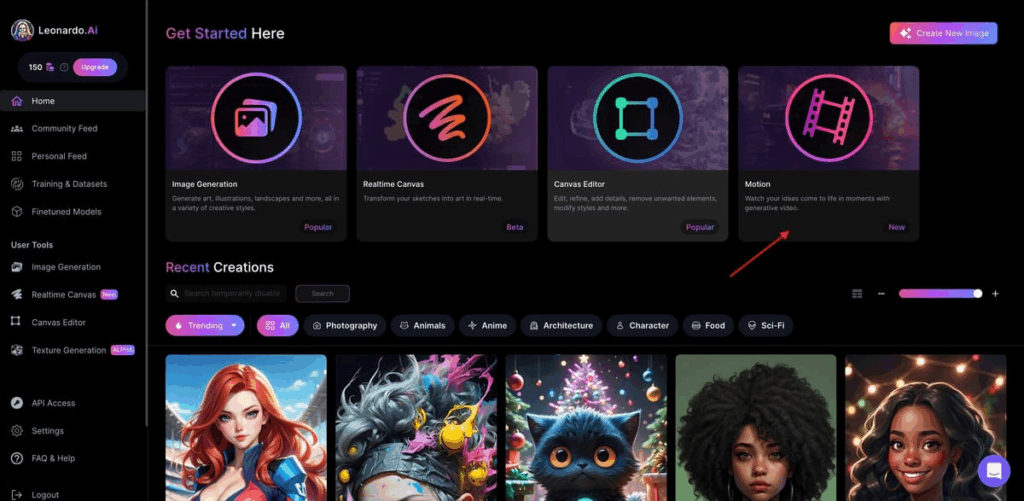
Leonardo AI’s video generation capabilities represent a significant leap forward in AI-powered content creation. With the April 2025 update to Motion 2.0, Leonardo AI now offers smoother playback with improved frame rates and faster video generation. This enhancement has positioned the platform as a serious contender in the AI video space.
The video generation feature allows users to create short animated clips from static images or text descriptions. This functionality is particularly valuable for social media content, advertising materials, and educational resources. The improved frame rates and processing speed mean creators can iterate quickly and produce professional-quality videos without extensive technical expertise.
The Motion 2.0 update has addressed many of the earlier limitations, providing more stable animations and better temporal consistency. Users can now create videos with smooth transitions and natural-looking motion, making the output suitable for professional applications.
Transparent PNG Generator
A unique feature that distinguishes Leonardo from many competitors is its transparent PNG generator. This tool automatically removes backgrounds from generated images, creating clean, professional assets ready for use in various applications.
The transparent PNG functionality is particularly valuable for e-commerce, graphic design, and marketing applications where clean product images or design elements are essential. The AI’s ability to accurately identify and remove backgrounds while preserving fine details and edge quality makes it a practical tool for professional workflows.
This feature eliminates the need for additional software or manual editing, streamlining the creative process and reducing production time. Users can generate ready-to-use assets directly from the platform, making it an efficient solution for businesses and creators who need quick turnaround times.
Pricing Structure and Value Proposition
One of the most frequently asked questions in any Leonardo AI Review 2025 is whether it delivers enough value for its cost. Leonardo AI employs a token-based pricing system that offers flexibility and scalability for different user needs. The free plan allows you to generate up to 150 images per day, making it a great starting point for new users. The plans range from $9 to $299 per month, providing more features and higher image generation limits.
Free Plan Benefits
The free tier of Leonardo AI is remarkably generous compared to industry standards. With 150 daily image generations, users can explore the platform’s capabilities without financial commitment. This allocation is sufficient for casual users, students, and professionals who need occasional AI-generated content.
The free plan includes access to core features like the AI art generator and basic customization options. While some advanced features are reserved for paid users, the free tier provides enough functionality to evaluate the platform’s suitability for specific needs.
Paid Plans Overview
The paid subscription tiers offer escalating benefits and features. The entry-level plan at $9 per month provides additional tokens and access to premium features like priority generation and advanced customization options. Mid-tier plans offer increased token allocations and faster processing times, while the premium $299 plan caters to heavy users and commercial applications.
Each plan includes different token allocations, with Leonardo AI pricing employs a token-based system. Each image generated costs a specific number of tokens, with prices ranging from 5 to 8 tokens per image. This variable pricing based on complexity and resolution allows users to optimize their usage based on specific requirements.
The token system provides transparency and control over costs, enabling users to budget effectively and avoid unexpected charges. Users can monitor their token usage and adjust their generation habits accordingly, making it suitable for both personal and commercial applications.
User Experience and Interface Design
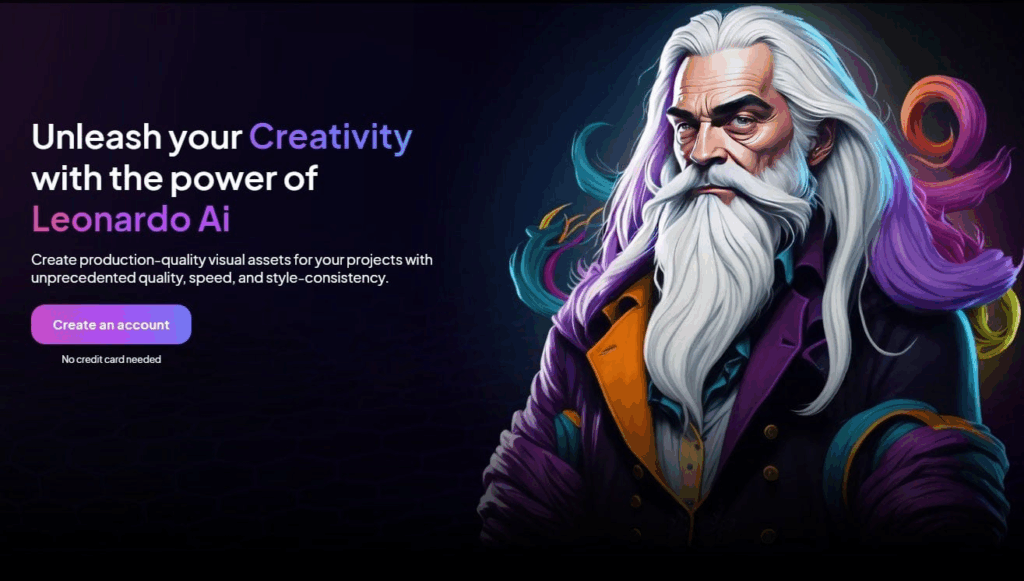
Leonardo AI prioritizes user experience through its intuitive interface and streamlined workflows. The platform’s design philosophy focuses on making advanced AI capabilities accessible to users regardless of their technical background.
The main interface presents a clean, organized layout with clearly labeled sections for different features. Navigation is straightforward, with logical groupings of tools and settings. New users can quickly orient themselves and begin creating without extensive tutorials or documentation.
The prompt input system is particularly well-designed, offering helpful suggestions and examples to guide users in crafting effective descriptions. The platform provides real-time feedback and previews, allowing users to refine their prompts before committing tokens to generation.
Mobile and Cross-Platform Accessibility
Leonardo AI offers comprehensive cross-platform support, including web-based access and mobile applications. The platform’s responsive design ensures consistent functionality across different devices and screen sizes.
The mobile application provides full access to core features, allowing users to generate and edit images on the go. This accessibility is particularly valuable for creators who need to work flexibly or collaborate remotely. The mobile app maintains the same user-friendly interface principles as the web version, ensuring a seamless experience across platforms.
Android users can access Leonardo AI through the dedicated mobile application, which provides optimized performance and native integration with mobile workflows. The app supports offline viewing of generated images and cloud synchronization for seamless workflow continuation across devices.
Performance Analysis and Quality Assessment
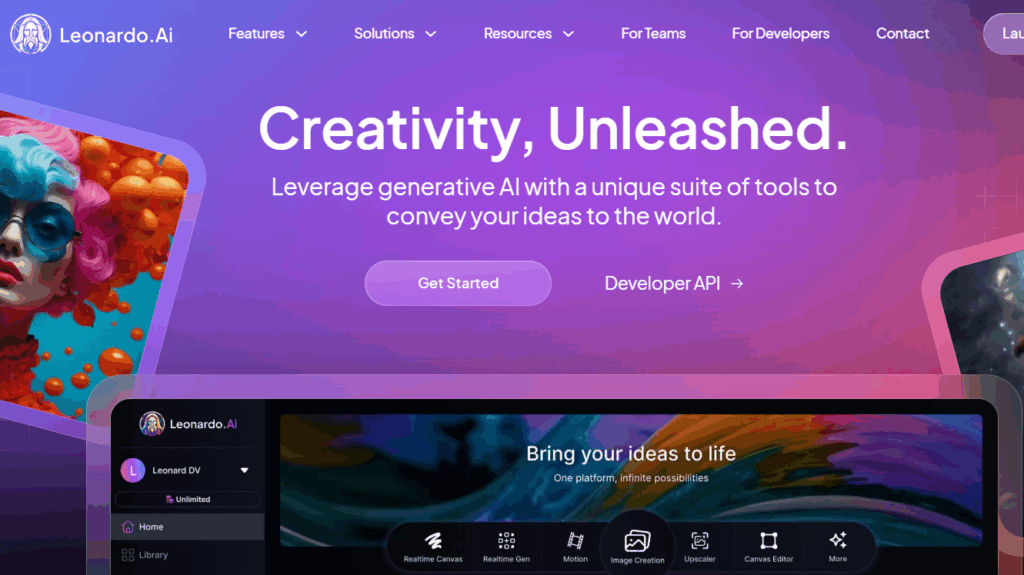
The quality of AI-generated content is ultimately what determines a platform’s success, and Leonardo AI delivers consistently impressive results. Independent testing and user feedback consistently highlight the platform’s ability to produce high-quality images that meet professional standards.
Image Quality and Consistency
Leonardo AI excels in generating high-resolution images with excellent detail preservation and color accuracy. The platform’s advanced algorithms ensure consistent quality across different styles and subjects, making it reliable for professional applications.
The system’s understanding of artistic principles results in well-composed images with appropriate lighting, depth, and visual hierarchy. Users frequently report satisfaction with the platform’s ability to interpret complex prompts and deliver results that align with their creative vision.
Photorealistic generation is a particular strength, with the AI producing images that often blur the line between generated and photographed content. This capability is especially valuable for marketing materials, product visualization, and architectural rendering.
Processing Speed and Efficiency
Leonardo AI has invested heavily in infrastructure to ensure fast generation times and reliable performance. The platform’s processing speed has improved significantly with recent updates, reducing wait times and enabling more iterative creative workflows.
The system efficiently handles high-resolution generations without significant delays, making it practical for time-sensitive projects. Queue management and priority processing for paid users ensure consistent availability even during peak usage periods.
Batch processing capabilities allow users to generate multiple images simultaneously, improving efficiency for large projects or commercial applications. This feature is particularly valuable for businesses that need to produce large volumes of visual content.
Comparison with Industry Competitors
Throughout this Leonardo AI Review 2025, we’ve compared Leonardo with Midjourney and DALL·E to help you make an informed choice.
Leonardo AI vs. Midjourney
The comparison between Leonardo AI and Midjourney reveals distinct strengths and target audiences. Leonardo AI might be the better option for businesses that require consistent brand imagery or custom model training. On the other hand, Midjourney could be ideal for creative professionals looking for inspiration or exploring unique artistic styles.
Midjourney has established itself as a leader in artistic interpretation and creative exploration, with a strong community aspect that fosters collaboration and inspiration. However, Leonardo AI offers superior customization options and business-focused features that make it more suitable for commercial applications.
Leonardo AI excels in customization, allowing users to adjust various parameters for tailored outputs. It also enables users to train their own models, offering a high degree of versatility. This customization capability is particularly valuable for businesses that need to maintain brand consistency across generated content.
Leonardo AI vs. DALL-E
When compared to DALL-E, Leonardo AI offers more generous free usage and greater control over generation parameters. Like MidJourney and DALL-E, it turns text prompts into stunning visuals, but it stands out by offering more customization and control.
DALL-E remains strong in creative interpretation and unusual concept generation, but Leonardo AI provides more practical features for business applications. The platform’s focus on user-friendly workflows and commercial viability makes it an attractive alternative for professional users.
The video generation capabilities of Leonardo AI also represent a significant advantage over DALL-E, which primarily focuses on static image generation. This comprehensive approach makes Leonardo a more versatile platform for diverse creative needs.
Real-World Applications and Use Cases
Digital Marketing and Advertising
Leonardo AI has proven particularly valuable in digital marketing applications, where high-quality visual content is essential for engagement and conversion. Marketing teams use the platform to create social media assets, advertisement visuals, and promotional materials quickly and cost-effectively.
The ability to generate consistent brand imagery while maintaining creative flexibility makes Leonardo ideal for marketing campaigns. Users can create variations of visual themes while ensuring brand coherence, enabling more dynamic and engaging marketing strategies.
Product visualization capabilities allow e-commerce businesses to create professional product images without expensive photography sessions. The transparent PNG generator is particularly valuable for creating clean product shots suitable for online catalogs and marketing materials.
Content Creation and Social Media
Content creators across various platforms leverage Leonardo AI to enhance their visual storytelling capabilities. The platform’s speed and quality make it practical for creators who need to produce regular content across multiple channels.
YouTubers, bloggers, and social media influencers use Leonardo to create thumbnails, background images, and promotional graphics. The platform’s ability to generate content in various styles allows creators to maintain visual consistency while exploring different aesthetic approaches.
The video generation features enable creators to produce animated content and motion graphics, expanding their creative possibilities beyond static images. This capability is particularly valuable for social media platforms that prioritize video content.
Educational and Training Materials
Educational institutions and training organizations use Leonardo AI to create engaging visual content for learning materials. The platform’s ability to generate illustrations, diagrams, and conceptual imagery makes it valuable for curriculum development and instructional design.
Teachers and instructional designers can create custom visuals that align with specific learning objectives, making educational content more engaging and effective. The platform’s accessibility ensures that educators with limited design experience can still produce professional-quality materials.
Limitations and Considerations
Technical Limitations
While Leonardo AI offers impressive capabilities, users should be aware of certain limitations. The platform occasionally struggles with complex architectural details or highly specific technical requirements. Users working on projects requiring extreme precision may need to supplement AI generation with traditional design methods.
The video generation features, while improved, still have limitations in terms of length and complexity. Users seeking long-form video content or complex animations may need to consider dedicated video production tools.
Text generation within images remains challenging, with the AI sometimes producing illegible or incorrectly spelled text. Users requiring specific textual elements should plan for manual editing or alternative approaches.
Cost Considerations
The token-based pricing system, while transparent, can become expensive for high-volume users. Businesses with extensive visual content needs should carefully evaluate their usage patterns and budget accordingly.
The variable token cost based on image complexity and resolution means that costs can vary significantly depending on generation settings. Users should experiment with different settings to find the optimal balance between quality and cost-effectiveness.
Community and Support
Leonardo AI’s community aspect, while growing, is not as established as platforms like Midjourney with their Discord-based communities. Users seeking extensive community support and collaboration may find the current offerings limited.
The platform’s support resources are comprehensive but may not match the community-driven assistance available on more established platforms. Users should consider their support requirements when evaluating the platform.
Future Outlook and Development
Leonardo AI continues to invest heavily in research and development, with regular updates and feature additions. The platform’s commitment to improvement is evident in recent updates like Motion 2.0, which significantly enhanced video generation capabilities.
The company’s focus on user feedback and iterative improvement suggests continued evolution of the platform’s capabilities. Users can expect ongoing enhancements to image quality, processing speed, and feature availability.
Integration with other creative tools and platforms appears to be a priority, with potential developments in API access and third-party integrations that could expand the platform’s utility in professional workflows.
Conclusion and Recommendations
Based on this detailed Leonardo AI Review 2025, it’s clear that the platform is designed for creators who need more than just basic image generation. Leonardo AI represents a compelling option in the AI art generation space, offering a unique combination of accessibility, quality, and business-focused features. The platform’s generous free tier makes it an excellent starting point for users exploring AI-generated content, while its paid plans provide substantial value for professional and commercial applications.
The platform is particularly well-suited for businesses requiring consistent, high-quality visual content, content creators seeking to enhance their visual storytelling capabilities, and educators needing custom illustrations and training materials. The combination of image and video generation capabilities makes it a versatile tool for diverse creative needs.
While some limitations exist, particularly in highly specialized applications, Leonardo AI’s continued development and user-focused approach suggest these will be addressed over time. The platform’s commitment to accessibility and quality makes it a strong contender for users seeking reliable AI-generated content solutions.
For users considering Leonardo AI, the generous free tier provides an excellent opportunity to evaluate the platform’s suitability for specific needs. The transparent pricing and flexible token system make it easy to scale usage based on requirements, while the user-friendly interface ensures quick adoption regardless of technical background.
The platform’s position in the competitive AI art generation market appears strong, with unique features and capabilities that differentiate it from established competitors. As the AI art generation space continues to evolve, Leonardo AI’s focus on practical applications and user experience positions it well for continued growth and adoption. If you’re looking for a reliable, scalable solution, this Leonardo AI Review 2025 confirms it’s one of the top tools to consider this year.