Top 7 Best AI Detection Tools (2025)
As artificial intelligence continues to revolutionize content creation, the ability to distinguish between human-written and AI-generated text has become crucial for educators, employers, and content creators alike. With powerful language models like GPT-4, Claude, and Gemini producing increasingly sophisticated content, the need for reliable AI detection tools has never been greater.
In 2025, the landscape of AI-generated content presents both opportunities and challenges. While these tools enhance productivity and creativity, they also raise concerns about academic integrity, authenticity in journalism, and transparency in professional communications. The best AI content detectors have evolved to keep pace with advancing AI technology, offering sophisticated algorithms that can identify subtle patterns in AI-generated text.
Whether you’re a teacher checking student assignments, an SEO professional ensuring content authenticity, or a hiring manager reviewing applications, choosing the right AI detector is essential. This comprehensive guide examines the top 7 AI detection tools available in 2025, analyzing their accuracy, features, and ideal use cases to help you make an informed decision.
1. Originality.ai – The Premium AI Content Detector
Best For: Professional content creators, agencies, and SEO teams
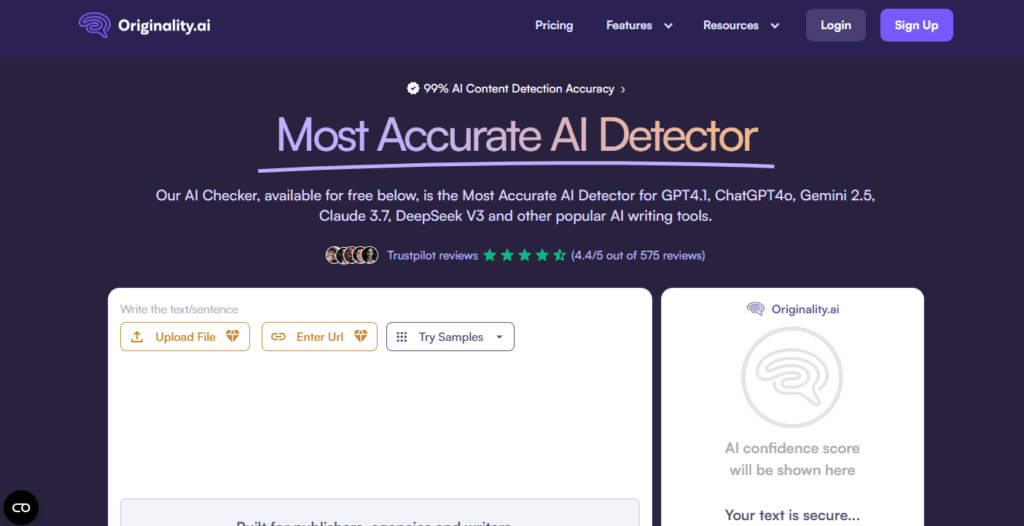
Originality.ai stands out as one of the most accurate AI detection tools available in 2025, specifically designed to detect content from GPT-3, GPT-4, ChatGPT, Claude, and other popular language models. This AI detector excels in identifying AI-generated text with impressive accuracy rates, making it a favorite among content marketers and digital agencies.
The platform offers a comprehensive AI vs human text checker that goes beyond simple detection. Users can upload documents, paste text, or even scan entire websites to identify AI-generated content. The tool provides detailed reports showing which sections are likely AI-generated, helping users understand exactly where modifications might be needed.
What sets Originality.ai apart is its plagiarism and AI detection combo feature, allowing users to check for both copied content and AI generation simultaneously. The platform integrates seamlessly with popular content management systems and offers bulk scanning capabilities for large-scale content audits.
The pricing model is credit-based, with plans starting at $14.95 per month for 2,000 credits. Each credit allows you to scan 100 words, making it cost-effective for regular users. The tool also offers a Chrome extension for quick checks while browsing, and its API allows for custom integrations.
For businesses serious about content authenticity, Originality.ai’s team management features enable multiple users to collaborate on content verification projects. The detailed reporting and high accuracy make it an invaluable tool for maintaining content integrity across large organizations.
2. ZeroGPT – Free AI Detection Software with High Accuracy
Best For: Students, educators, and casual users seeking free AI detection
ZeroGPT has gained significant popularity as a reliable free AI detection software that can identify content generated by various AI models including GPT-3, GPT-4, ChatGPT, and Claude. This GPT detector tool offers an intuitive interface that makes AI detection accessible to users of all technical levels.
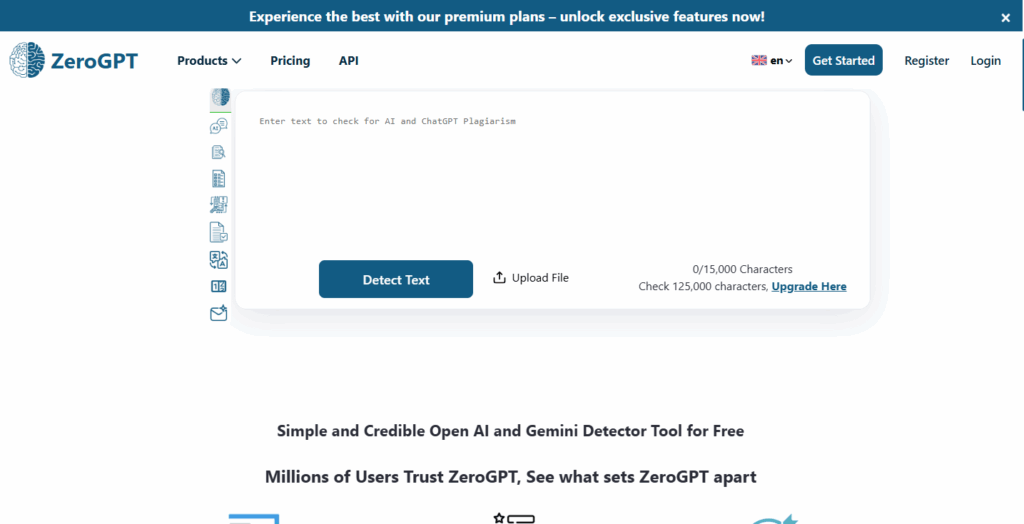
The platform uses advanced machine learning algorithms to analyze text patterns, syntax, and writing style to determine the likelihood of AI generation. Users can simply paste text into the interface and receive instant results showing the percentage of content that appears to be AI-generated. The tool highlights specific sections that trigger AI detection, providing valuable insights into potential problem areas.
One of ZeroGPT’s strongest features is its ability to handle multiple languages, making it useful for international users and multilingual content verification. The tool processes up to 15,000 characters per scan in the free version, which is sufficient for most academic papers, blog posts, and business documents.
For educators, ZeroGPT offers batch processing capabilities that allow teachers to check multiple student submissions efficiently. The tool generates detailed reports that can be saved and shared, making it easier to document potential academic integrity issues.
While the free version covers most basic needs, ZeroGPT also offers premium plans with enhanced features like API access, priority processing, and increased character limits. The premium version includes advanced detection algorithms specifically trained on the latest AI models, ensuring better accuracy for newer AI-generated content.
3. GPTZero – The Academic Integrity Specialist
Best For: Educators, academic institutions, and researchers
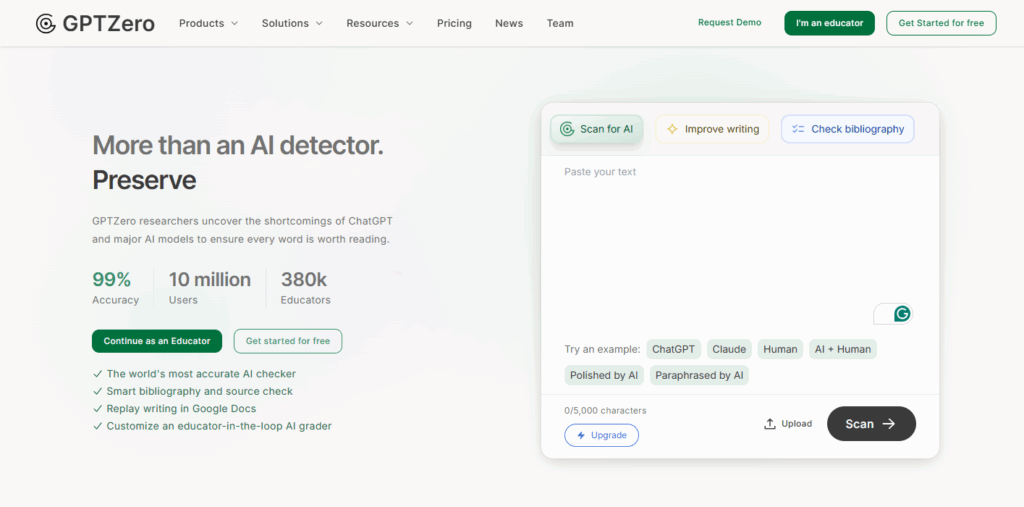
Developed specifically for educational environments, GPTZero has become the go-to AI detection tool for teachers and academic institutions worldwide. This specialized detector focuses on identifying AI-generated academic content, making it particularly effective at catching AI-written essays, research papers, and homework assignments.
GPTZero’s unique approach analyzes text for “perplexity” and “burstiness” – two key indicators that distinguish human writing from AI generation. Perplexity measures how predictable text is, while burstiness examines the variation in sentence structure and complexity. Human writing typically shows more variation and unpredictability compared to AI-generated content.
The platform offers seamless integration with popular learning management systems like Canvas, Blackboard, and Google Classroom. Teachers can upload assignments directly or use the bulk upload feature to check multiple submissions simultaneously. The tool provides clear, easy-to-understand reports that highlight suspicious sections and provide confidence scores for each detection.
One of GPTZero’s standout features is its writing report functionality, which provides detailed analysis beyond simple AI detection. The tool examines writing patterns, vocabulary complexity, and stylistic consistency to give educators a comprehensive view of student work authenticity.
For institutions, GPTZero offers enterprise solutions with advanced analytics, custom training on specific AI models, and comprehensive reporting dashboards. The platform’s API allows integration with existing educational technology stacks, making it easy to implement across large school systems.
The free version allows basic detection for up to 5,000 words per month, while premium plans start at $10 per month for individual educators and scale up for institutional licenses.
4. Writer.com AI Content Detector – Enterprise-Grade Solution
Best For: Large enterprises, content teams, and brand protection
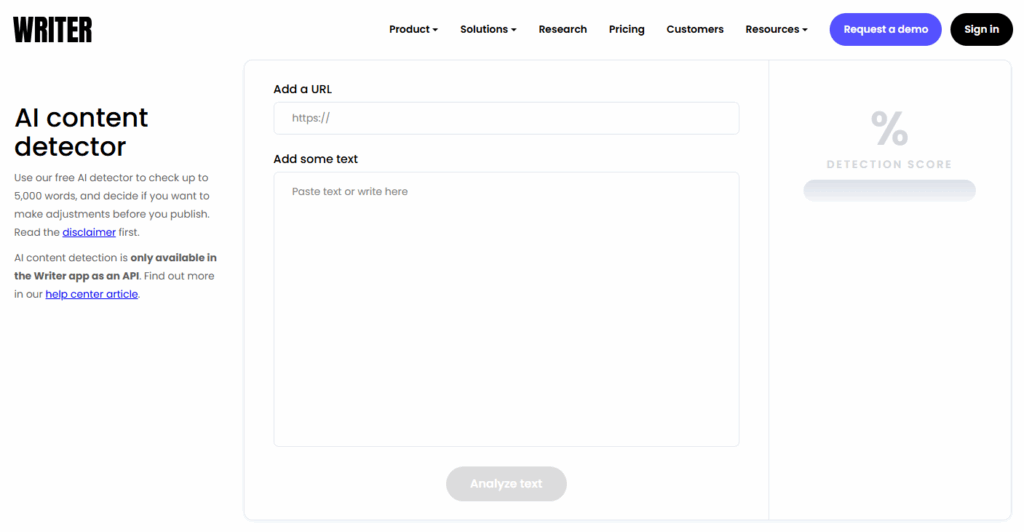
Writer.com’s AI Content Detector represents the enterprise end of AI detection technology, offering sophisticated analysis capabilities designed for large-scale content operations. This tool excels at maintaining brand voice authenticity and ensuring content compliance across multi-team environments.
The platform integrates advanced natural language processing algorithms specifically trained to detect content from major AI models including GPT-4, Claude, Gemini, and other emerging language models. What makes Writer.com unique is its ability to analyze content not just for AI generation, but also for adherence to brand guidelines and style requirements.
The tool offers real-time detection as content is being created, allowing writers and editors to identify potential AI-generated sections during the writing process. This proactive approach helps maintain content authenticity before publication, reducing the risk of publishing AI-generated content unintentionally.
Writer.com’s enterprise features include advanced user management, detailed audit trails, and comprehensive reporting capabilities. Content managers can track AI detection across teams, monitor trends in AI usage, and ensure compliance with company policies regarding AI-generated content.
The platform’s API integration capabilities make it particularly valuable for organizations using content management systems, publishing platforms, or custom editorial workflows. The tool can automatically flag suspicious content during the review process, streamlining quality control procedures.
Pricing for Writer.com is custom-quoted based on team size and feature requirements, making it most suitable for medium to large enterprises with substantial content operations. The investment is typically justified by the comprehensive feature set and enterprise-grade support.
5. Copyleaks AI Content Detector – Multi-Language Support Champion
Best For: International organizations and multilingual content verification
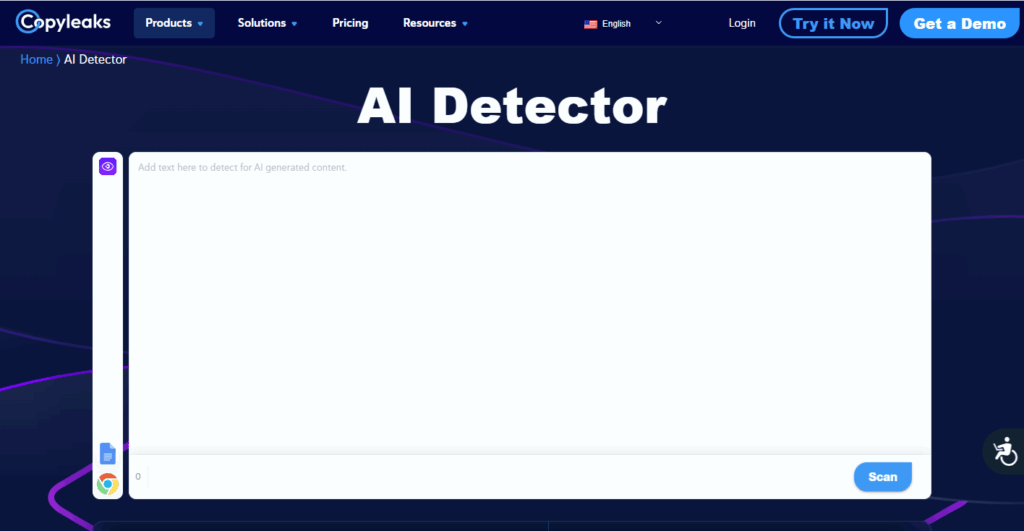
Copyleaks has established itself as a leader in multilingual AI detection, offering robust support for content verification across dozens of languages. This comprehensive AI detection tool combines plagiarism checking with advanced AI content detection, making it ideal for global organizations and educational institutions.
The platform’s AI detection algorithms are trained on content from multiple language models and can identify AI-generated text in languages including English, Spanish, French, German, Italian, Portuguese, and many others. This multilingual capability makes it particularly valuable for international businesses and multinational educational institutions.
Copyleaks offers flexible integration options including API access, browser extensions, and direct integrations with popular platforms like Microsoft Office, Google Workspace, and various learning management systems. The tool can process individual documents or perform batch analysis on large content libraries.
One of the platform’s strongest features is its comprehensive reporting system, which provides detailed analysis of both AI detection and plagiarism results. Users receive clear visualizations showing the likelihood of AI generation, potential plagiarism sources, and overall content authenticity scores.
For educational institutions, Copyleaks offers specialized academic plans with features like gradebook integration, student submission management, and detailed instructor dashboards. The platform supports various file formats including Word documents, PDFs, and plain text, making it versatile for different academic workflows.
The pricing structure includes both subscription plans and pay-per-use options, starting at $8.99 per month for individual users and scaling up for enterprise implementations. Educational discounts are available for qualifying institutions.
6. Content at Scale AI Detector – SEO and Marketing Focus
Best For: Digital marketers, SEO professionals, and content agencies
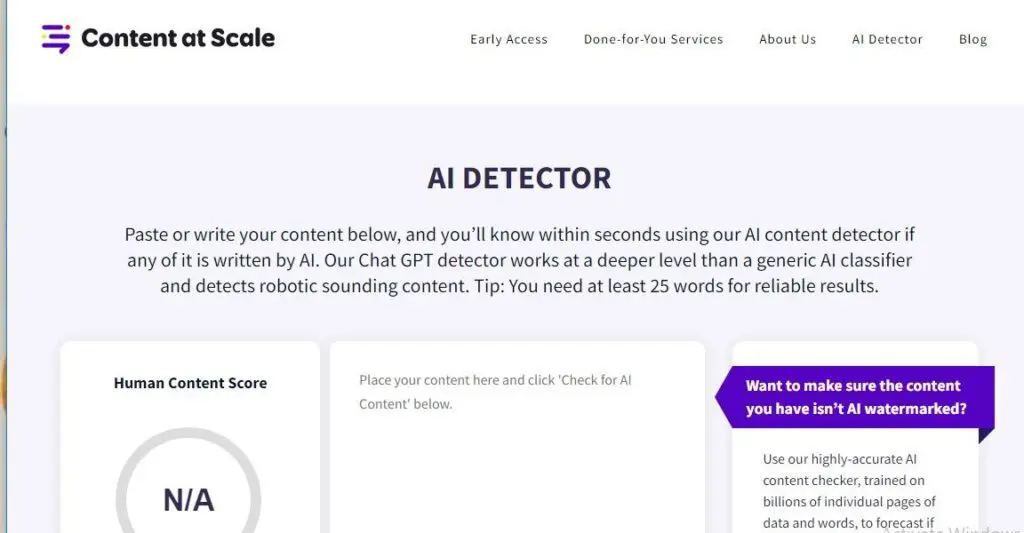
Content at Scale’s AI Detector is specifically designed for marketing professionals who need to verify content authenticity while maintaining SEO effectiveness. This tool understands the unique challenges of marketing content and provides insights that help balance AI assistance with authentic, engaging copy.
The platform analyzes content for AI generation patterns while also evaluating factors important to digital marketers, such as readability, keyword density, and engagement potential. This dual approach helps marketers ensure their content is both authentic and optimized for search engines and audience engagement.
Content at Scale’s detector is trained on marketing-specific content patterns, making it particularly effective at identifying AI-generated blog posts, product descriptions, social media content, and email marketing copy. The tool recognizes the nuanced differences between AI-generated marketing content and human-created promotional material.
The platform offers workflow integration features that allow marketing teams to incorporate AI detection into their content review processes. Users can set up automated checks for content before publication, ensuring consistency in quality control across marketing campaigns.
One unique feature is the tool’s ability to provide suggestions for improving content authenticity when AI generation is detected. Rather than simply flagging problematic content, the platform offers guidance on how to make AI-assisted content more human-like and engaging.
The pricing model is subscription-based with plans starting at $20 per month for individual marketers and scaling up for agency and enterprise use. The tool includes additional marketing features like content optimization suggestions and competitive analysis tools.
7. Turnitin AI Writing Detection – Academic Standard Bearer
Best For: Educational institutions and academic integrity enforcement
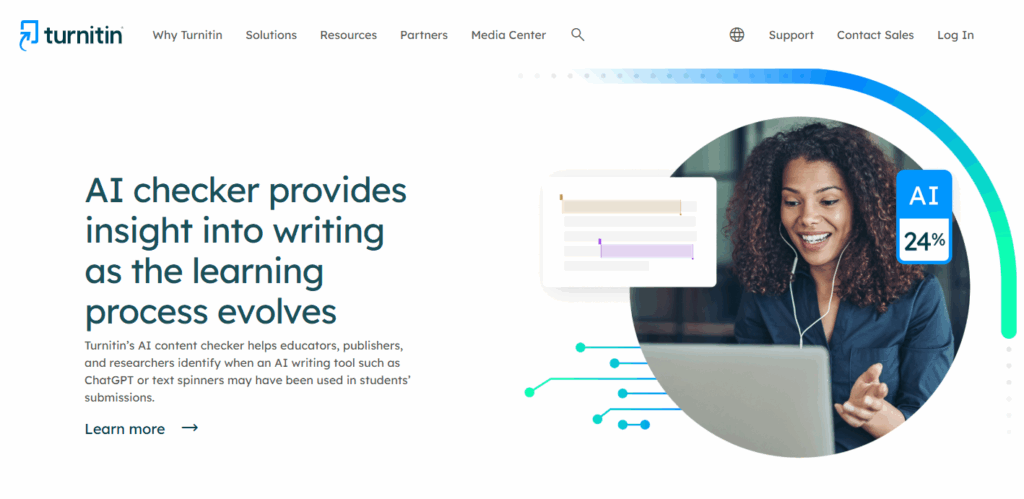
Turnitin’s AI Writing Detection feature represents the academic gold standard for AI content identification in educational settings. As part of the widely-used Turnitin platform, this tool benefits from extensive training data from millions of academic submissions and sophisticated detection algorithms.
The system integrates seamlessly with existing Turnitin workflows, allowing educators to check for both plagiarism and AI generation in a single process. This unified approach streamlines academic integrity checking and provides comprehensive reports that address multiple forms of content authenticity concerns.
Turnitin’s AI detection focuses specifically on academic writing patterns, making it highly effective at identifying AI-generated essays, research papers, and other scholarly content. The tool is regularly updated to detect content from newer AI models and adapts to evolving AI writing techniques.
The platform provides detailed similarity reports that highlight both potentially plagiarized content and sections likely generated by AI. Instructors receive clear confidence indicators for AI detection results, helping them make informed decisions about student work authenticity.
For institutions, Turnitin offers comprehensive analytics and reporting features that help administrators track trends in AI usage across courses and departments. This institutional-level insight supports policy development and academic integrity education initiatives.
Turnitin’s pricing is typically handled through institutional licenses, making it most accessible to schools and universities rather than individual users. The integration with existing academic workflows and the platform’s reputation for reliability make it a preferred choice for formal educational settings.
Comparison Table: AI Detection Tools at a Glance
| Tool Name | Best Use Case | Detects Which Models | Accuracy Level | Free/Paid | Notable Feature |
| Originality.ai | Professional content creation | GPT-3, GPT-4, ChatGPT, Claude | 95%+ | Paid ($14.95/month) | Plagiarism + AI detection combo |
| ZeroGPT | Students and casual users | GPT-3, GPT-4, ChatGPT, Claude | 90%+ | Free/Premium | Multi-language support |
| GPTZero | Academic institutions | GPT-3, GPT-4, ChatGPT | 92%+ | Free/Paid ($10/month) | LMS integration |
| Writer.com | Enterprise content teams | GPT-4, Claude, Gemini | 94%+ | Custom pricing | Real-time detection |
| Copyleaks | International organizations | Multiple models, multilingual | 91%+ | Paid ($8.99/month) | 30+ language support |
| Content at Scale | Digital marketing | Marketing-focused models | 89%+ | Paid ($20/month) | SEO optimization insights |
| Turnitin | Educational institutions | Academic-focused detection | 96%+ | Institutional license | Academic workflow integration |
Frequently Asked Questions
What is the most accurate AI detection tool in 2025?
Based on current testing and user feedback, Turnitin’s AI Writing Detection and Originality.ai consistently show the highest accuracy rates, both exceeding 95% in detecting AI-generated content. However, accuracy can vary depending on the specific AI model used to generate content and the type of text being analyzed. For academic content, Turnitin excels, while Originality.ai performs better for general web content and marketing materials.
Can AI detection tools catch GPT-4 or Claude-generated text?
Yes, most modern AI detection tools have been updated to identify content generated by GPT-4, Claude, and other advanced language models. However, the accuracy varies between tools, and newer AI models are becoming increasingly sophisticated at mimicking human writing patterns. Tools like Originality.ai, GPTZero, and Writer.com have specifically trained their algorithms on content from these advanced models to maintain detection effectiveness.
Are there free tools to detect AI-written content?
Several free AI detection tools are available, with ZeroGPT being one of the most popular options. GPTZero also offers a free tier with limited monthly usage. However, free tools typically have restrictions on text length, processing speed, and advanced features. For professional or high-volume use, paid tools generally offer better accuracy and more comprehensive analysis.
How do teachers detect AI in student writing?
Teachers can use specialized educational AI detection tools like GPTZero, Turnitin’s AI Writing Detection, or Copyleaks. These tools integrate with learning management systems and provide detailed reports highlighting potentially AI-generated sections. Many educators also look for telltale signs like unusually perfect grammar, lack of personal voice, generic examples, and inconsistent knowledge levels within the same paper.
Can Turnitin detect AI-generated essays?
Yes, Turnitin’s AI Writing Detection feature is specifically designed to identify AI-generated academic content, including essays, research papers, and assignments. The system analyzes writing patterns, vocabulary usage, and structural elements typical of AI-generated text. Turnitin regularly updates its detection algorithms to keep pace with new AI writing tools and techniques.
What are limitations of current AI detection technology?
Current AI detection tools face several limitations including false positives with ESL writers, difficulty detecting heavily edited AI content, varying accuracy with different AI models, and challenges with hybrid human-AI collaboration. Additionally, as AI writing technology improves, detection tools must constantly evolve to maintain effectiveness. No tool is 100% accurate, so human judgment remains important in the detection process.
How reliable is AI detection in academic integrity?
AI detection reliability in academic settings is generally high but not perfect. Most educational AI detection tools achieve 90-96% accuracy when properly implemented. However, institutions should use AI detection as part of a broader academic integrity strategy that includes education, clear policies, and human review of flagged content. The combination of technological tools and human oversight provides the most reliable approach to maintaining academic integrity.
Do AI detection tools work on paraphrased or edited AI content?
This represents one of the biggest challenges for AI detection tools. Heavily paraphrased or significantly edited AI content can be much harder to detect, as the tools rely on patterns and characteristics typical of direct AI output. However, sophisticated tools like Originality.ai and Turnitin are improving their ability to detect edited AI content by analyzing deeper linguistic patterns and writing style consistency.
Conclusion
The landscape of AI detection tools in 2025 offers robust solutions for various needs, from academic integrity to professional content verification. As AI-generated content becomes more sophisticated, these detection tools continue to evolve, providing essential services for educators, content creators, and organizations committed to authenticity.
When selecting an AI detection tool, consider your specific use case, accuracy requirements, and budget constraints. Academic institutions may benefit most from specialized tools like Turnitin or GPTZero, while content creators and marketers might prefer comprehensive solutions like Originality.ai or Writer.com.
The most effective approach often involves combining multiple detection methods with human judgment. No AI detection tool is perfect, and the technology continues to evolve rapidly. Stay informed about updates to both AI generation and detection technologies to maintain the most effective content verification strategies.
Remember that AI detection tools are most valuable when used as part of a broader strategy for maintaining content quality and authenticity. Whether you’re ensuring academic integrity, protecting brand reputation, or maintaining editorial standards, the right AI detection tool can provide crucial support in navigating the complex landscape of AI-generated content.
Test different tools based on your specific needs, and don’t rely solely on automated detection. The combination of advanced technology and human oversight remains the gold standard for content authenticity verification in 2025.